
















Work

Altus: an enterprise-ready website their marketing team runs.

Altus makes project and portfolio management software built for Microsoft 365. We redesigned and rebuilt their website in Webflow, moved it off WordPress, and set it up so their own marketing team can run it, in English and German.

Client
Altus
Industry
Project and portfolio management software
Languages
English and German
Timeline
March to July 2026
Work
Live site
altus.pro(opens in a new tab)
Our team
  • Matthew BishopDesign and build
Altus team
  • Nick RivettMarketing Manager
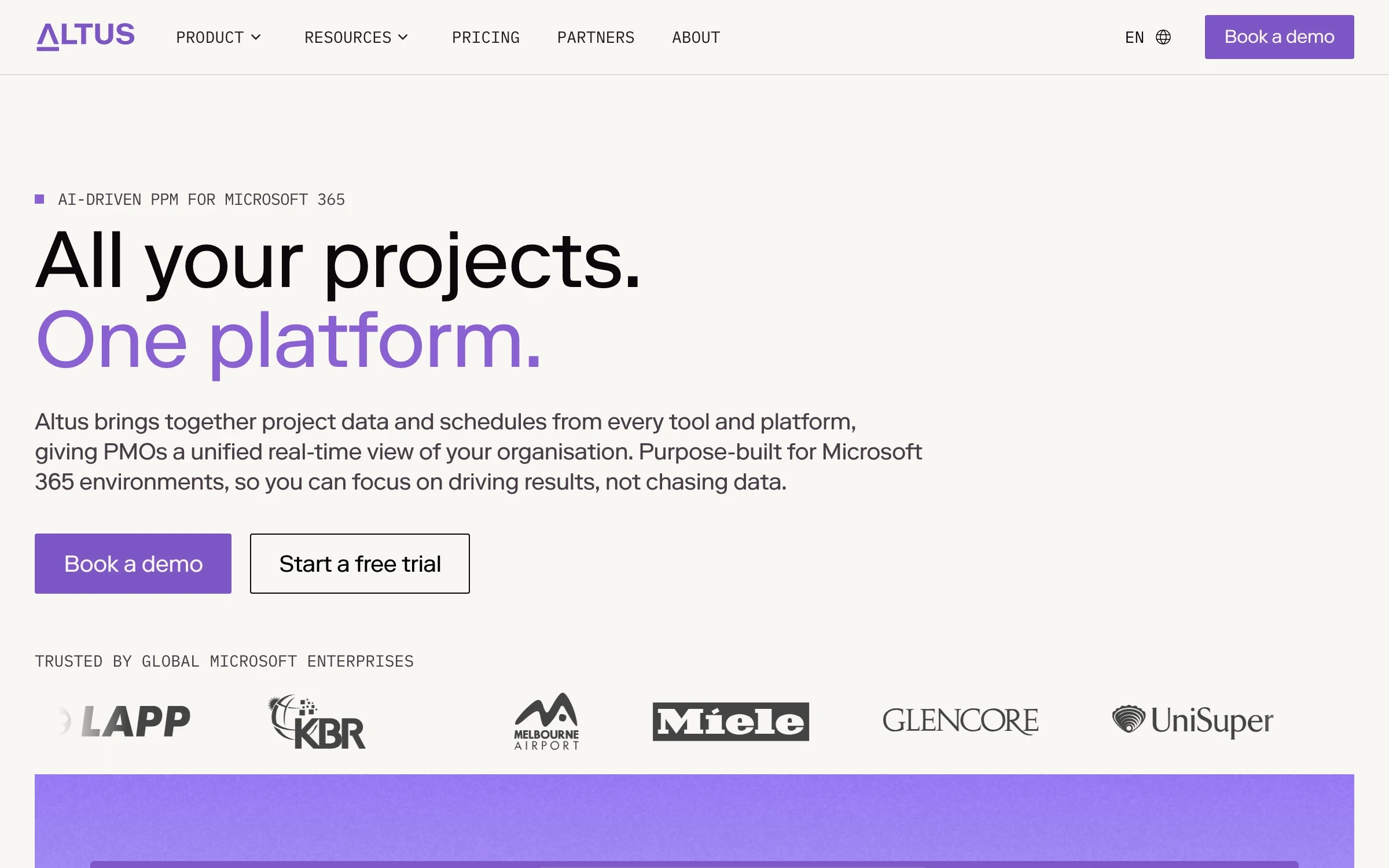
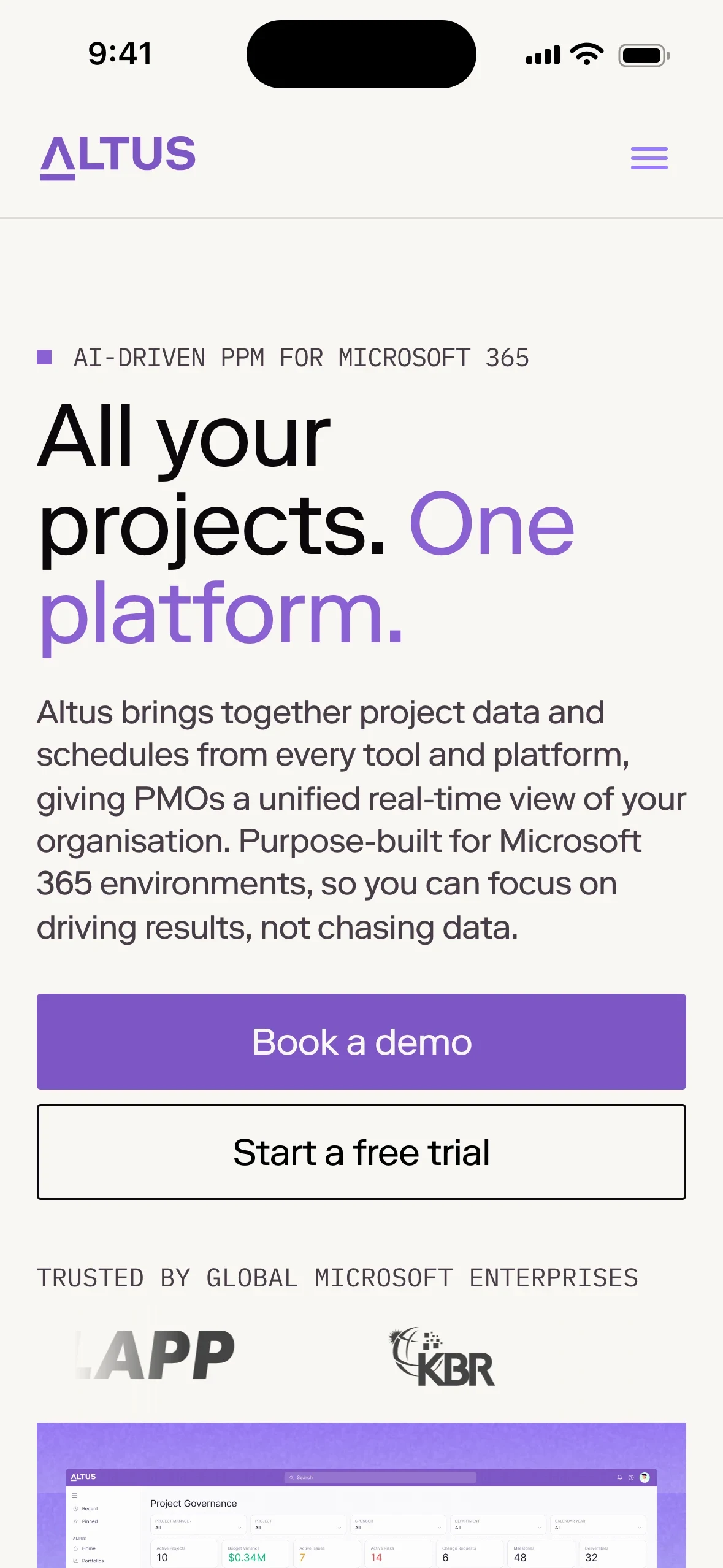
The Altus home page: “All your projects. One platform.”

A stopgap site selling to enterprises.

Altus had a WordPress site, put up in 2023 as a temporary fix, and it hadn’t kept up. Altus sells to large organisations running Microsoft 365, and the site didn’t look like it belonged in that company.

It was locked into a restrictive template, small changes needed an outside agency, and there was no way to add other languages. As Altus moved towards marketing-led growth, its marketing team needed a site it could run itself.

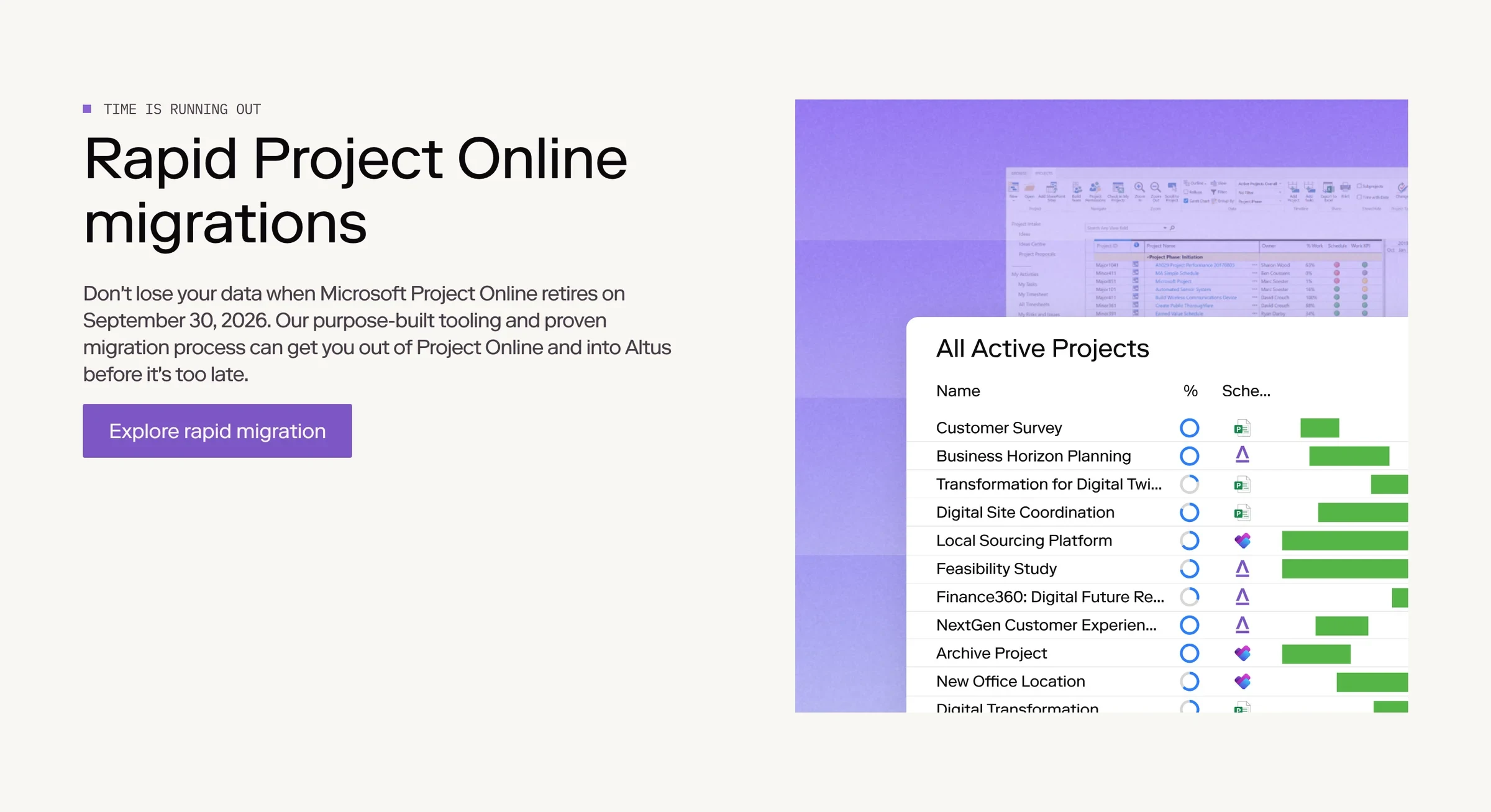
The timing mattered, too. Microsoft is retiring Project Online on 30 September 2026, and the organisations still using it are exactly the ones Altus sells to. The new site had to be ready to meet them.

Results.

  • 220+pages live across English and German
  • 2languages, from one site
  • 18weeks from kickoff to launch
  • 47blog posts, in a CMS the team runs
  • 24integration pages
  • 4currencies in the pricing calculator
  • “Website seems to be running well and all very positive feedback after the launch (and no SEO rankings dropping off a cliff which is always a relief!)”

    Nick Rivett, Marketing Manager, Altus

What we did for Altus.

March to April 2026

Structure and design

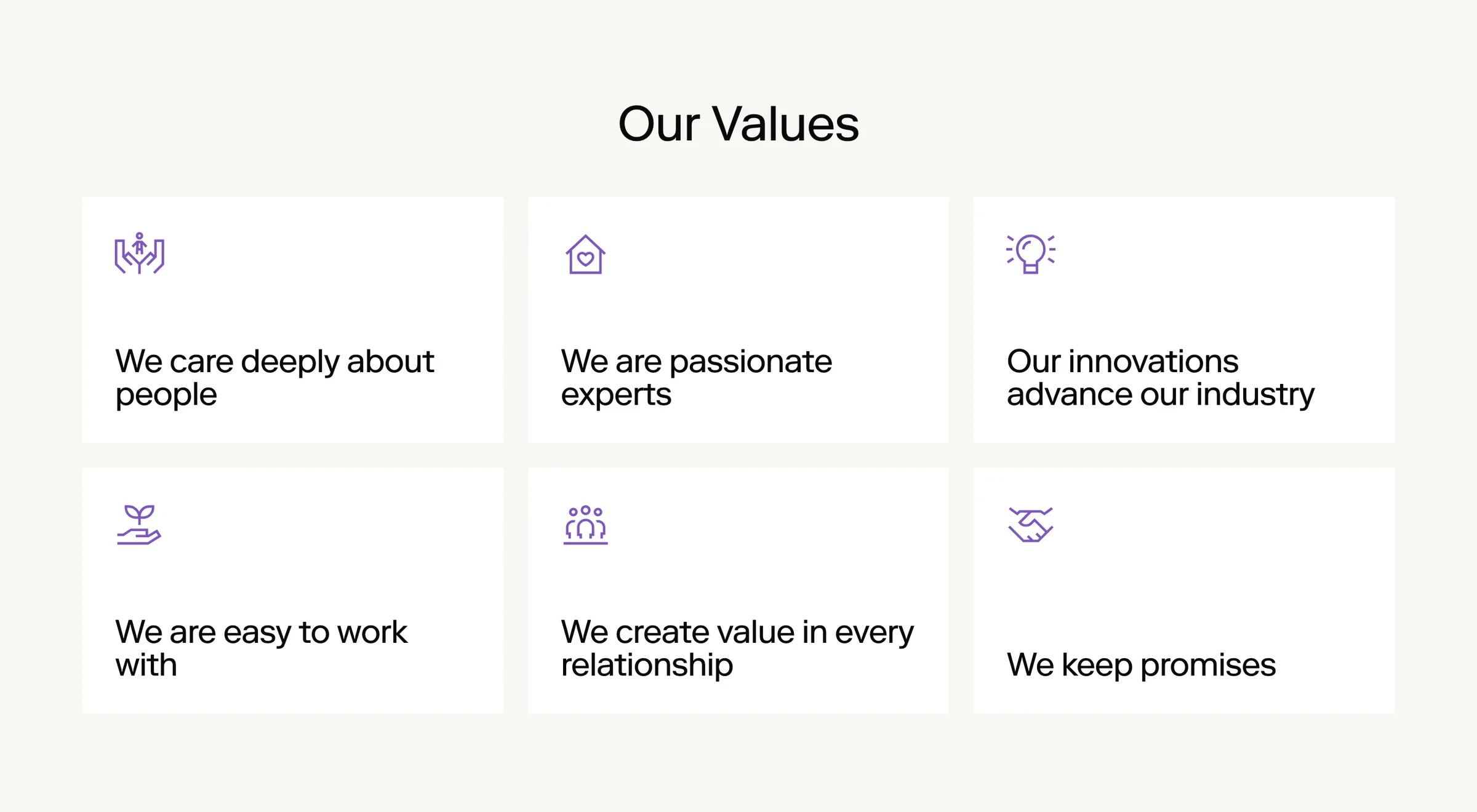
We started with a new structure, then two design concepts. Altus chose the second, closer to its existing brand: its own Reformer typeface at lighter weights, IBM Plex Mono for small labels, and the old palette’s plum swapped for black and charcoal alongside its lavenders and purples. The approved concept became a style guide, and the home page was designed before any build began.

  • Separate pages for portfolio, strategic portfolio and resource management
  • Sector pages and expanded resources
  • Pages for teams moving off Microsoft Project Online
  • A careers page of its own
  • A style guide, and the home page designed first
April to July 2026

Build, migration and launch

We built the site in Webflow from reusable components and brought the product screens to life with animation. When the old WordPress exports proved unreliable, we moved the blog, case studies and integrations across by hand. The site launched on 8 July 2026.

  • Pages built from reusable components
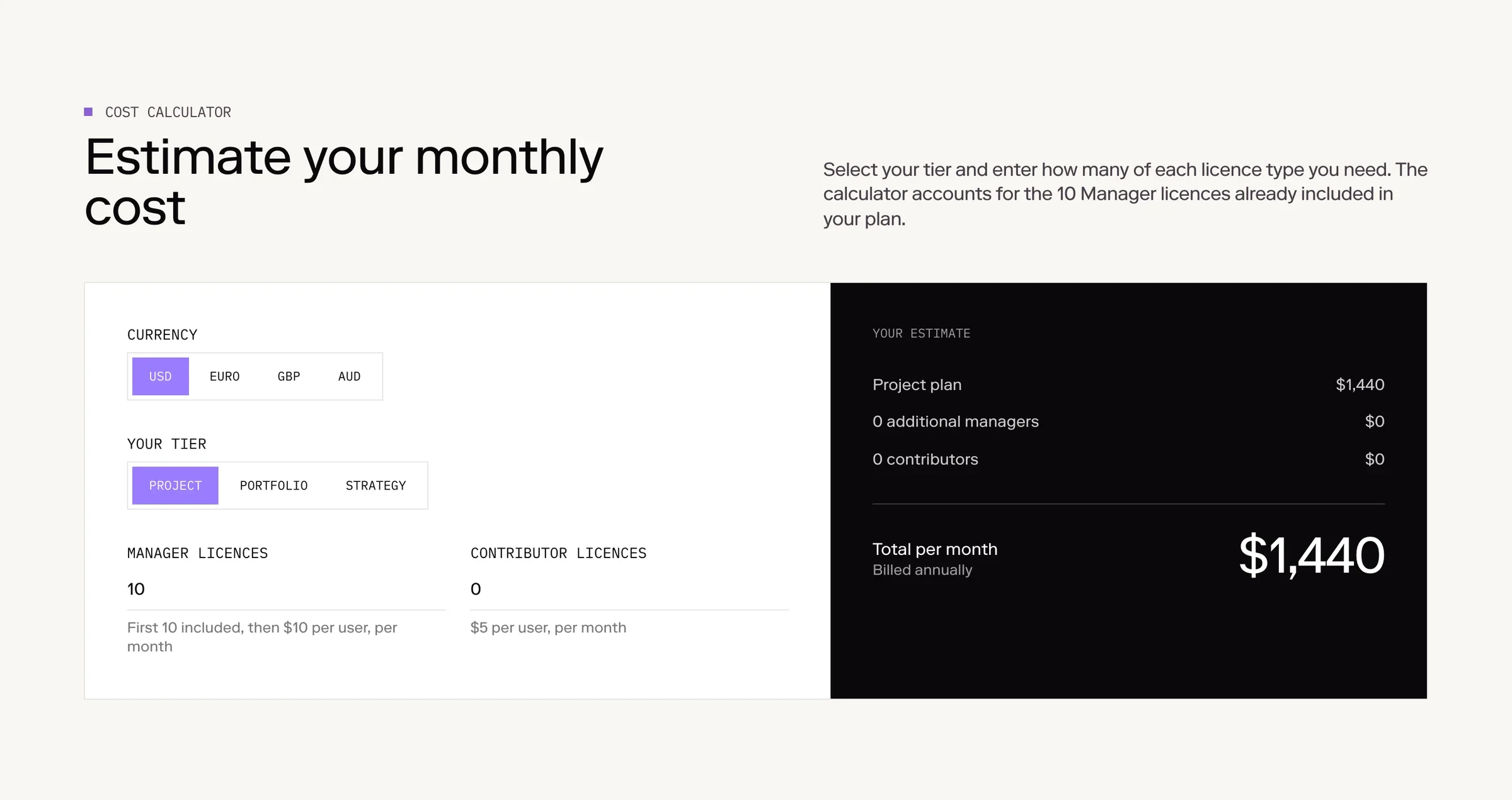
  • A custom pricing calculator in four currencies
  • Animated product demos, including a tabbed demo on the home page
  • The blog, case studies and integrations migrated from WordPress
  • HubSpot forms with thank-you pages, plus analytics and cookie consent
  • Sitemaps compared and redirects set before launch
  • The Altus home page on a phone
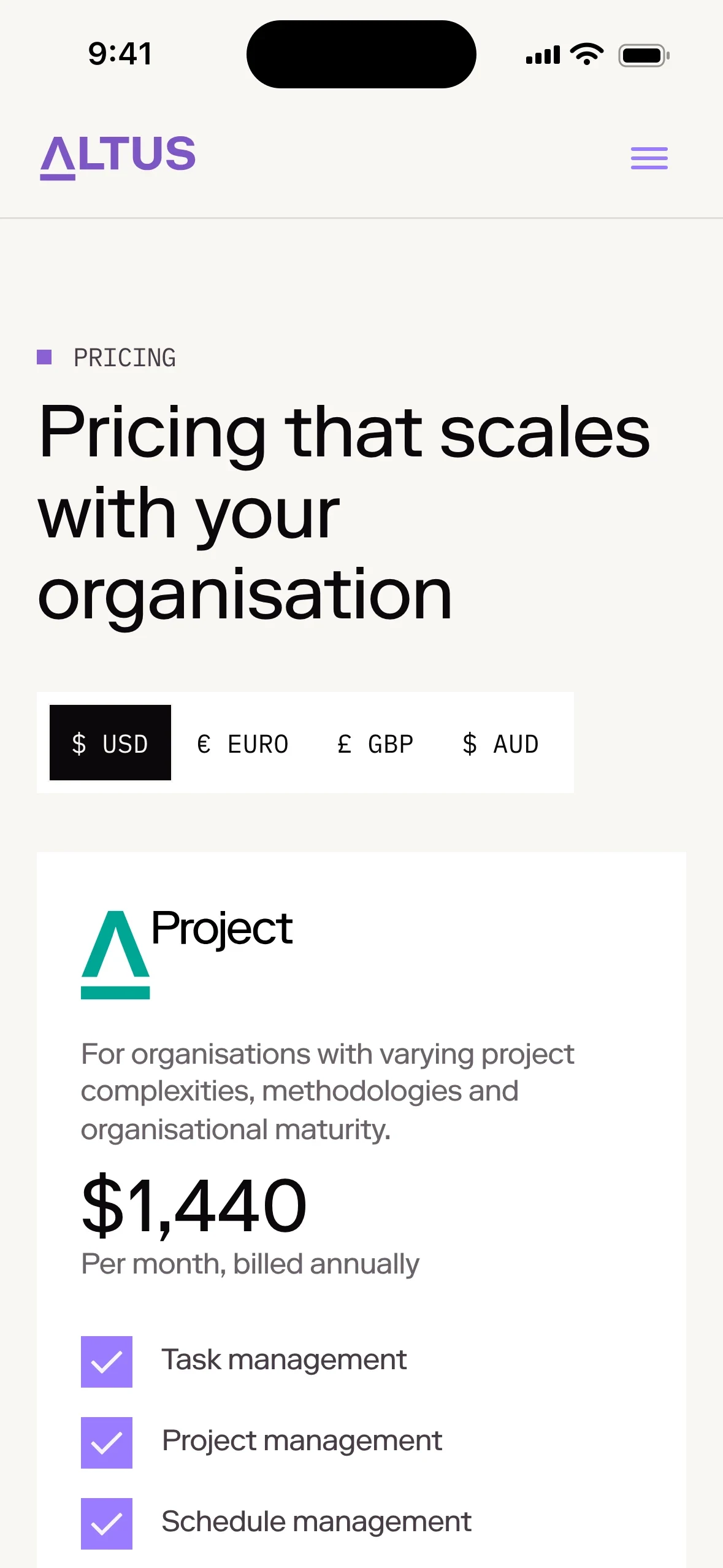
  • The Altus pricing calculator on a phone
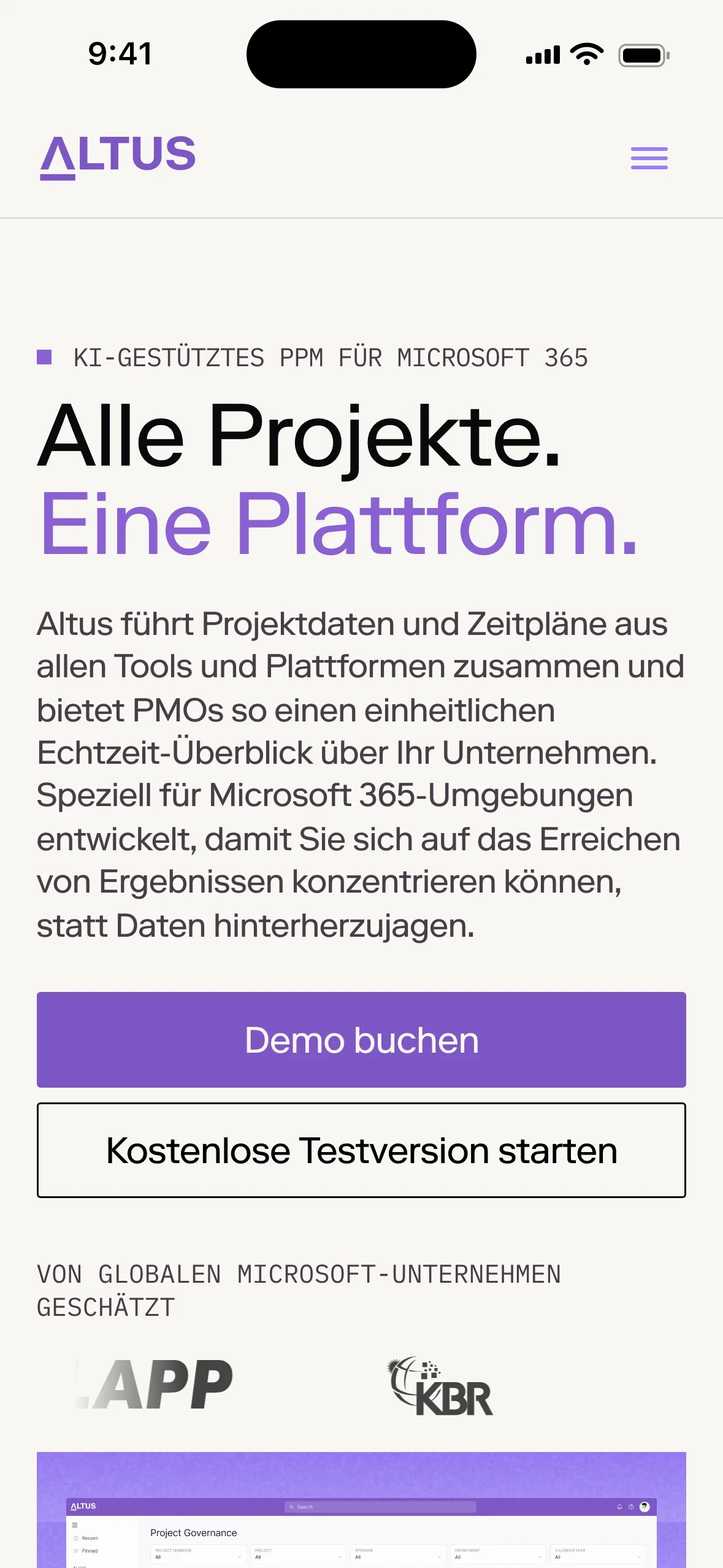
  • The German Altus home page on a phone

A structure for enterprise buyers.

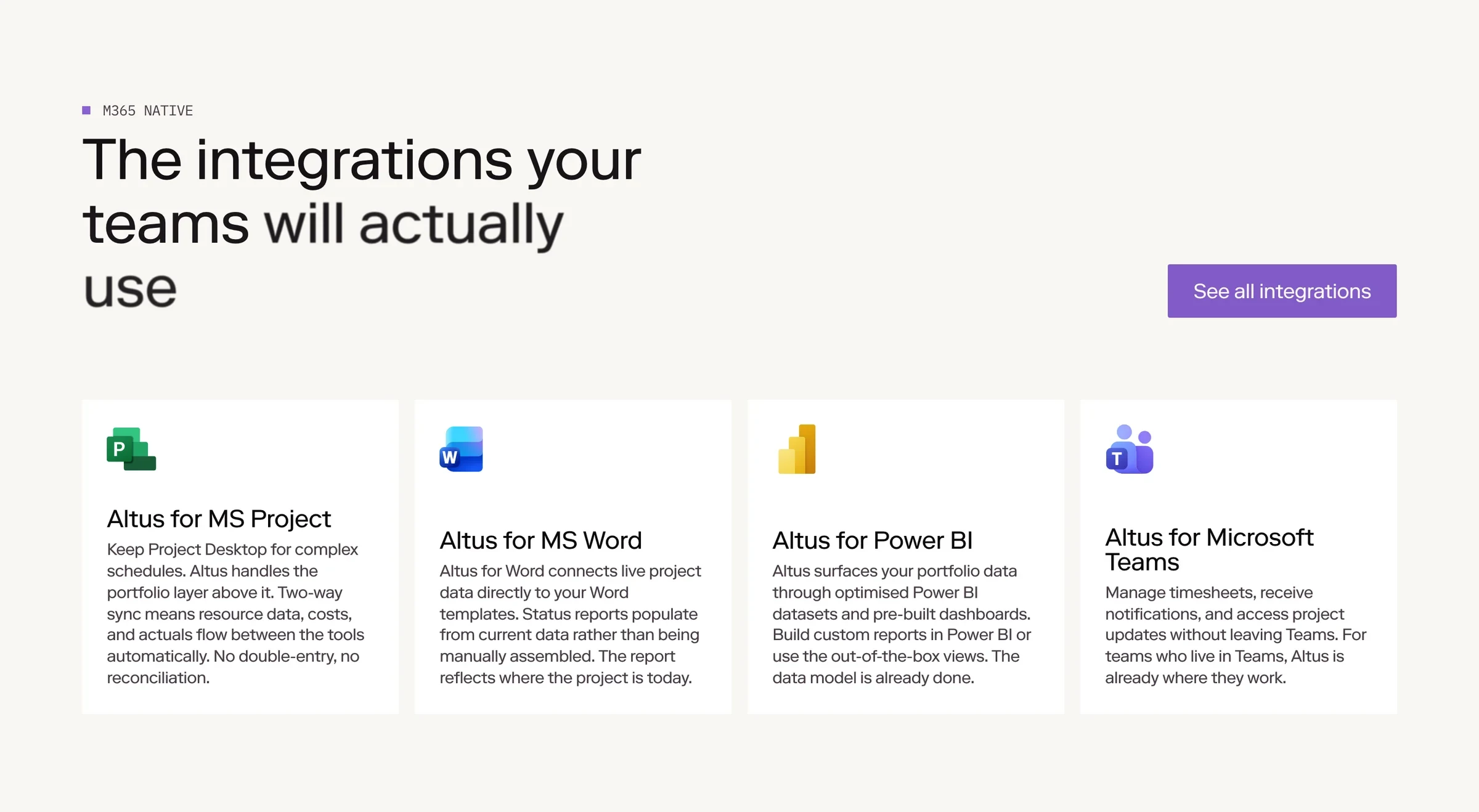
The old site sold everything from a handful of pages. The new structure gives portfolio, strategic portfolio and resource management a page each, adds pages for each sector and an expanded resources section, and gives careers a page of its own.

The navigation is a two-column mega menu with featured tiles the team chooses, and partners got a top-level page after the old “Become a partner” link proved easy to miss.

Product demos instead of stock photos.

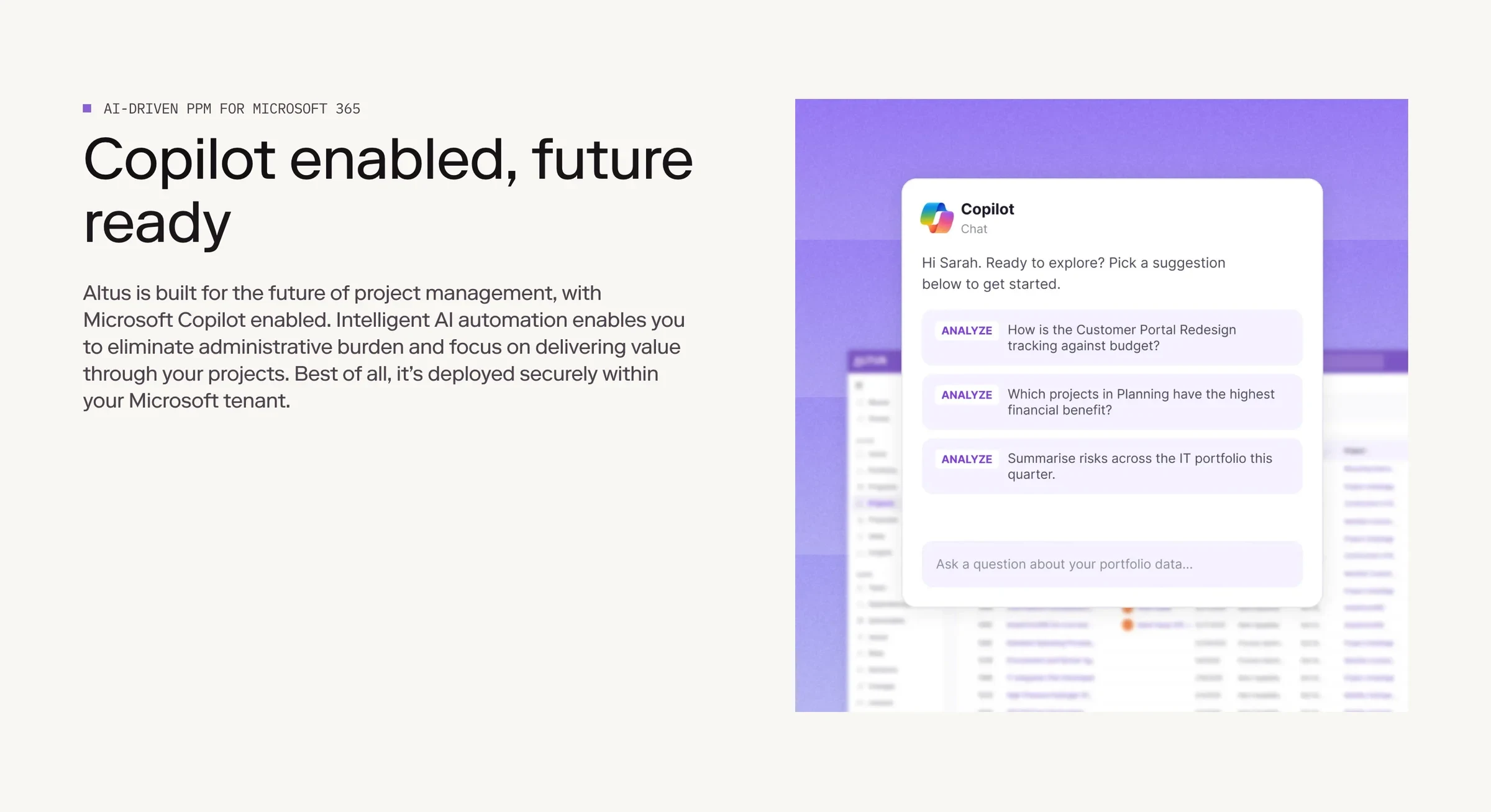
Stock photography made enterprise software look generic, so the new site shows the product instead. Each product page leads with the same base dashboard, and square close-ups of the interface stand in for photos further down.

On the home page, a tabbed demo cycles through the platform: seeing the full picture, connecting strategy to execution, and ending manual reporting. We built the tabs ourselves because Webflow’s own can’t hold links, kept them in CSS so search engines can read every tab, and animated the dashboards with Figma Motion and Lottie.

Pricing visitors can work out for themselves.

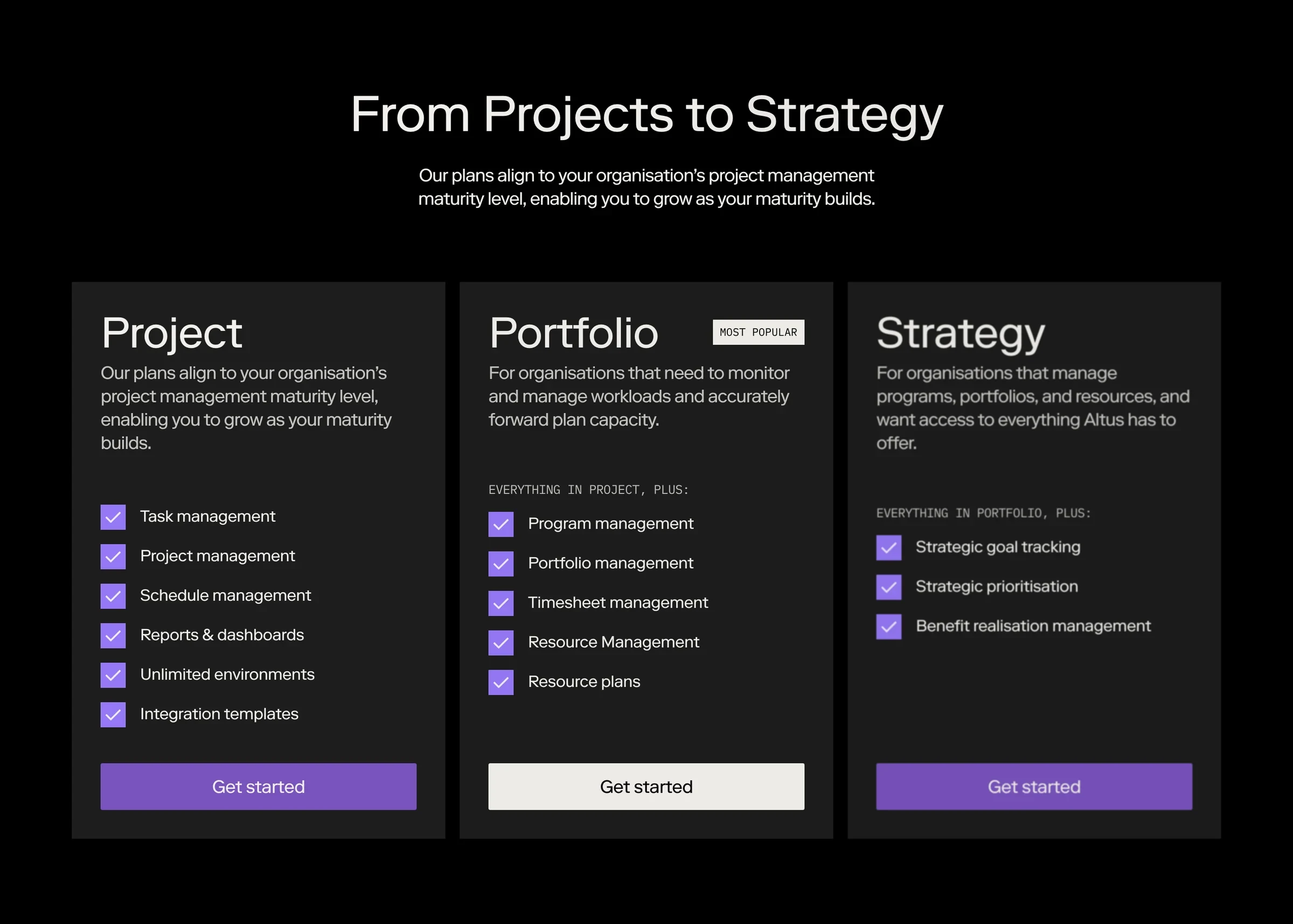
Altus wanted visitors to see what it would cost before talking to sales. The pricing page has a calculator that updates as you go: choose a currency (US dollars, euros, pounds or Australian dollars) and a plan, add manager and contributor licences, and it shows a monthly estimate, billed annually, with the first ten manager licences included.

Webflow’s built-in tabs couldn’t drive a calculator like this, so it runs on our own code inside the Webflow page, with the plans and wording around it still edited in Webflow by the marketing team.

Ready for Project Online’s retirement.

With Project Online retiring on 30 September 2026, Altus offers organisations a way off it. The new site gives that its own page, and a section near the top of the home page, with fixed-price migrations in under six weeks, a three-step guide to how it works and a consultation booking.

A feature comparison sets Project Online and Altus side by side, from scheduling and financials to resource management, so a team weighing the move can see what carries over and what it gains.

Built to be run by marketing.

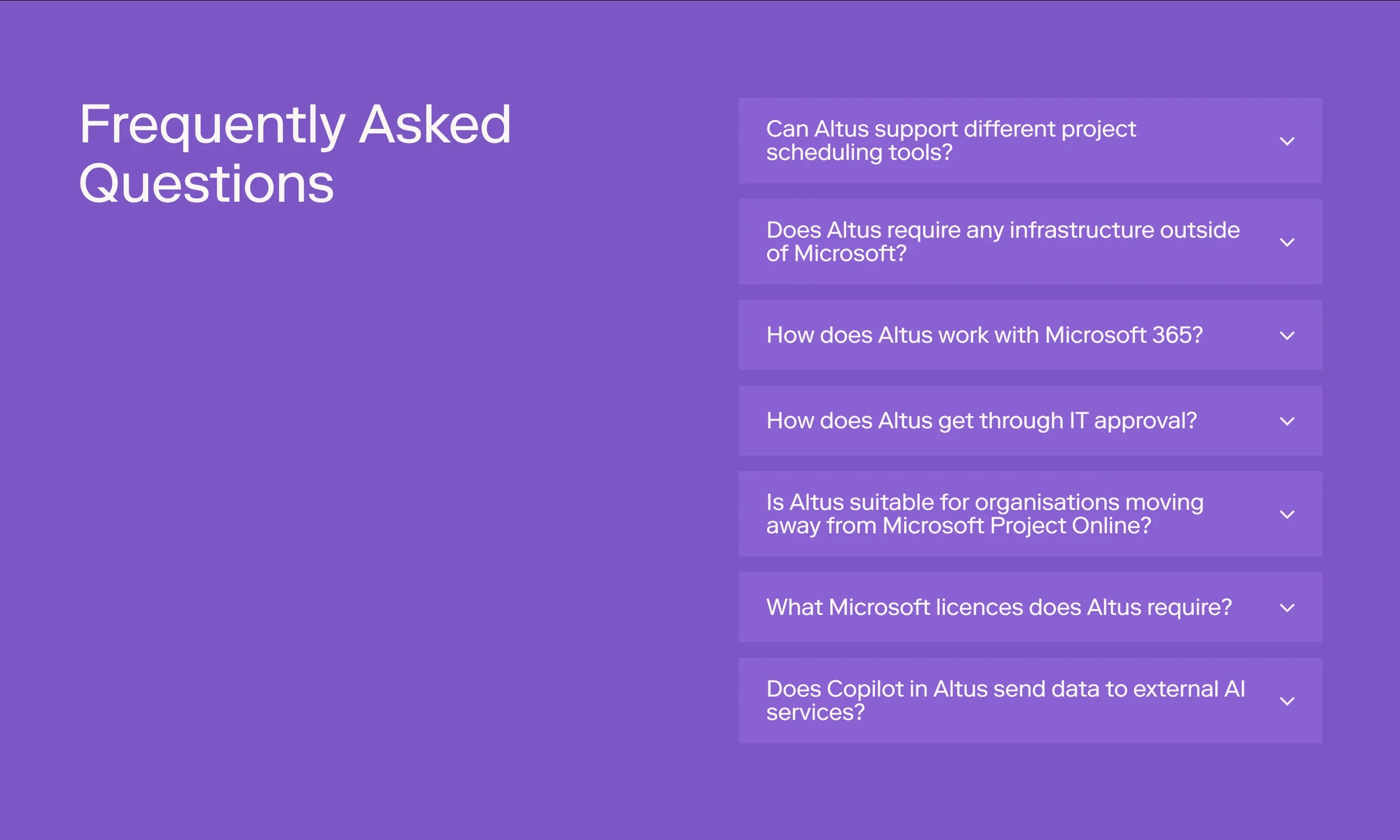
Every page is made from components the marketing team can rearrange, and the blog, case studies, integrations, sectors and webinars all live in Webflow’s CMS. Publishing a post or a new landing page doesn’t need a developer.

After launch we trained the team in a working session: editing in Webflow’s marketer mode, staging changes before they go live, the CMS, building pages from components, HubSpot forms, SEO fields and social images, redirects and backups.

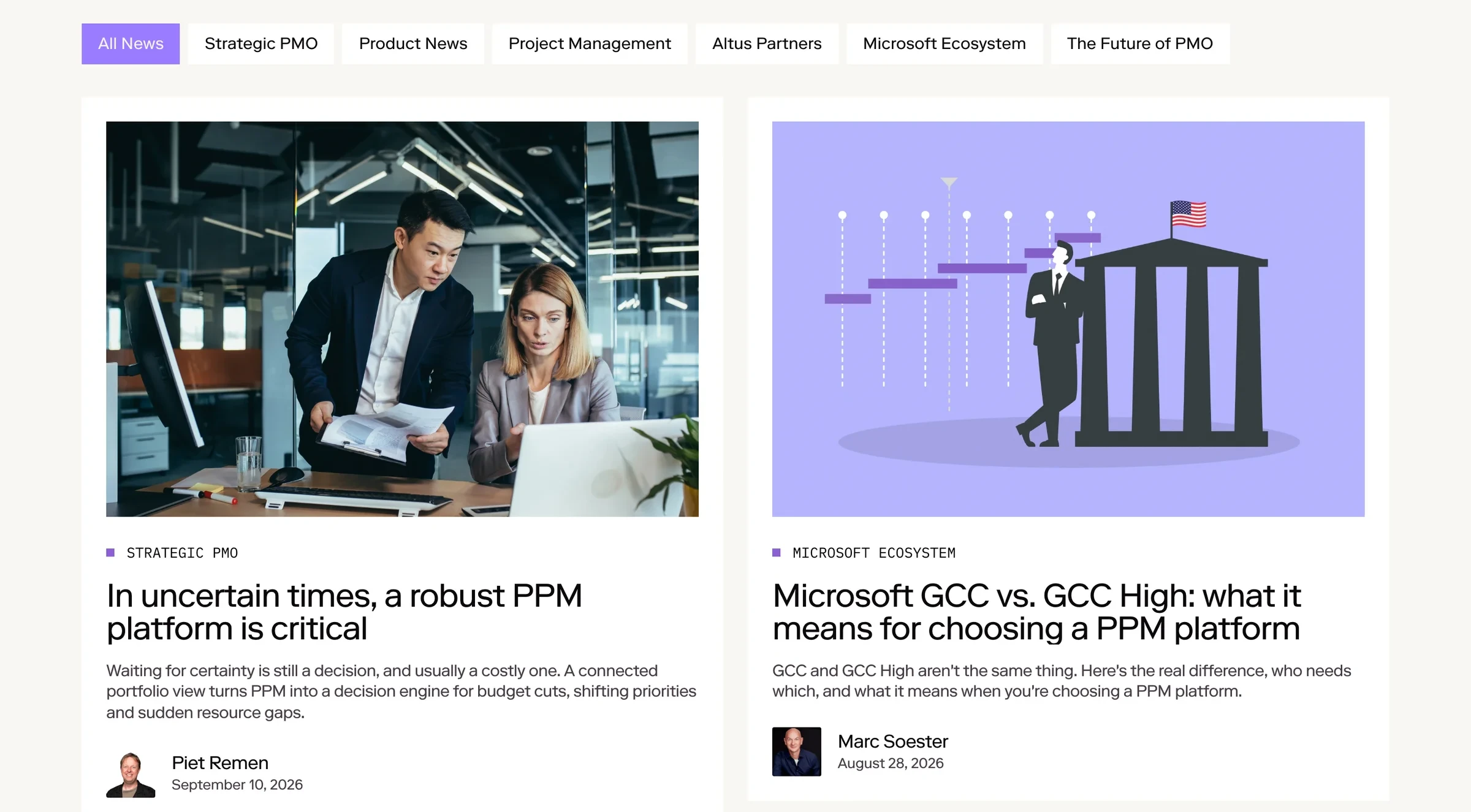
The Altus blog: category tabs over a grid of articles with their authors
Blog
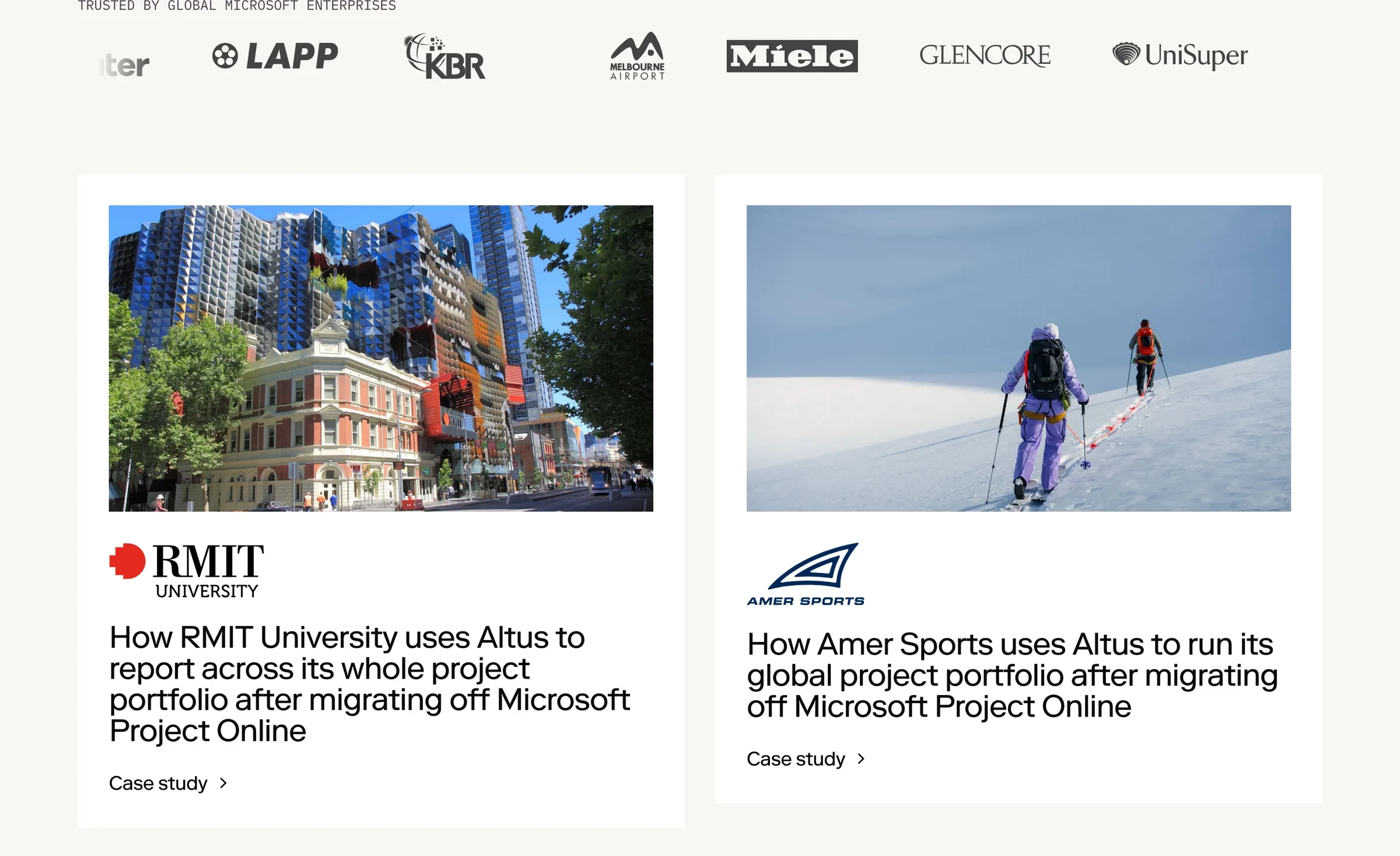
Altus case studies from RMIT, Amer Sports, The Lottery Corporation and Melbourne Airport, under a strip of client logos
Case studies

English and German, from one site.

A week after launch, Altus asked for German. We set it up with Webflow Localization: English at the root, German under /de with its own translated URLs, and hreflang tags that tell search engines which version to show. It went live in September 2026, once the translations were ready.

A language selector in the navigation and footer switches between English and Deutsch on any page. More than 100 German pages now sit alongside the English ones, managed from the same site.

The “Purpose-built for Microsoft 365” section in English
English
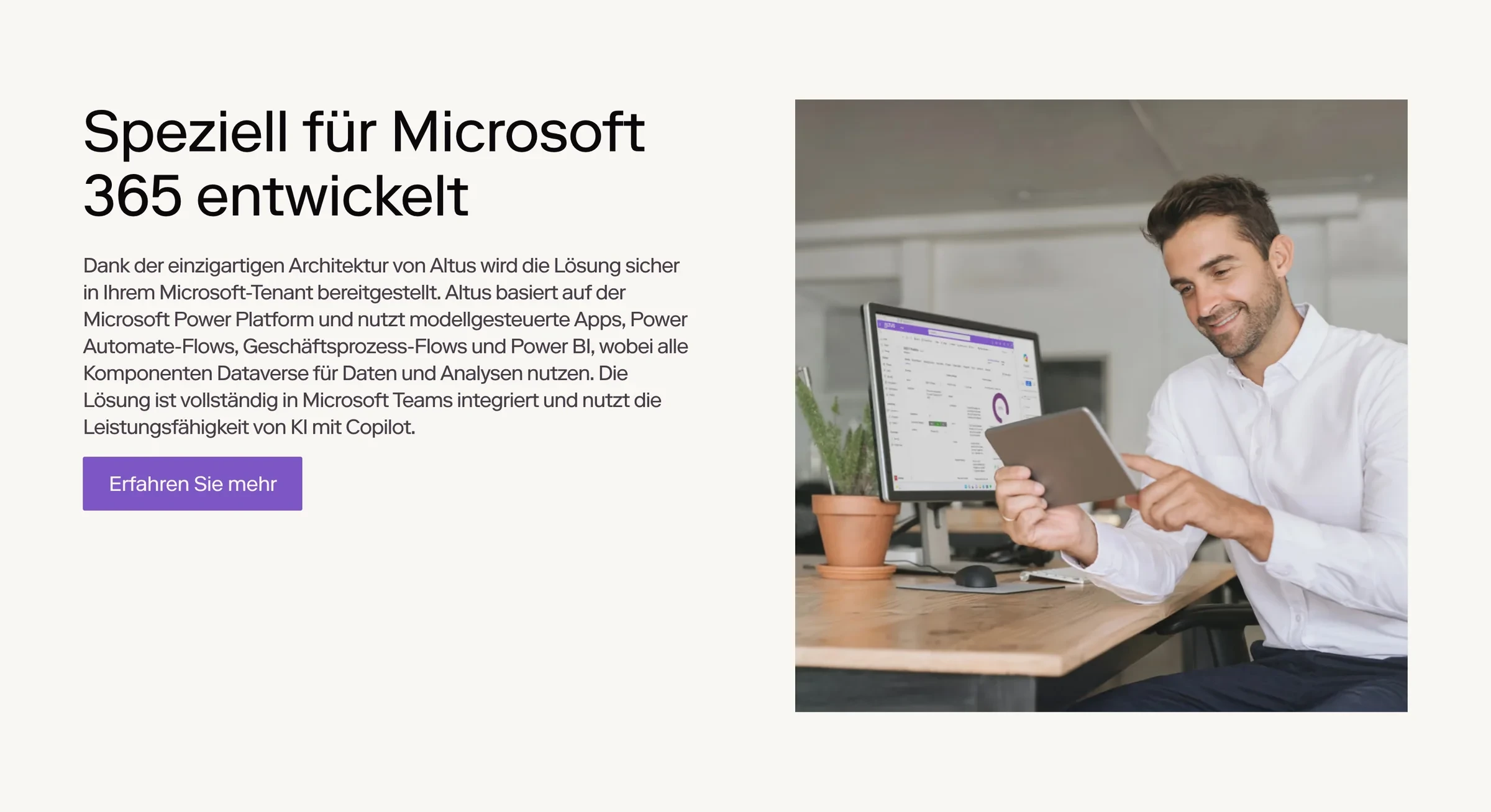
The same section in German: “Speziell für Microsoft 365 entwickelt”
Deutsch

Before the switch we compared the old and new sitemaps page by page and set redirects for anything that moved, so search engines and bookmarked links find every page in its new place.

The new site gives search engines more to work with: structured data for the organisation, the software, articles and breadcrumbs, FAQ markup on the three product pages, and titles, descriptions and social images set throughout.

In their words.

“Matt understood what we were after quickly, which saved us a lot of back and forth early on, and kept us updated at every stage…”
Nick Rivett, Marketing Manager, AltusGoogle review ↗