














Work

Smileyscope: a medical device website, ready for the world stage.

Smileyscope makes a medical-grade VR headset that helps patients through needles and other procedures. We designed and built their new website in Webflow, moved them off Wix, and launched Australian and US versions in time for World Health Expo in Dubai.

Client
Smileyscope
Industry
Medical technology
Versions
Australia and US
Timeline
September 2025 to February 2026
Work
Live site
smileyscope.com(opens in a new tab)
Our team
  • Matthew BishopProject lead
  • Josh BendallDesign
  • Axel SukiantoStrategy and copy
  • Mark EspedidoWebflow development
Smileyscope team
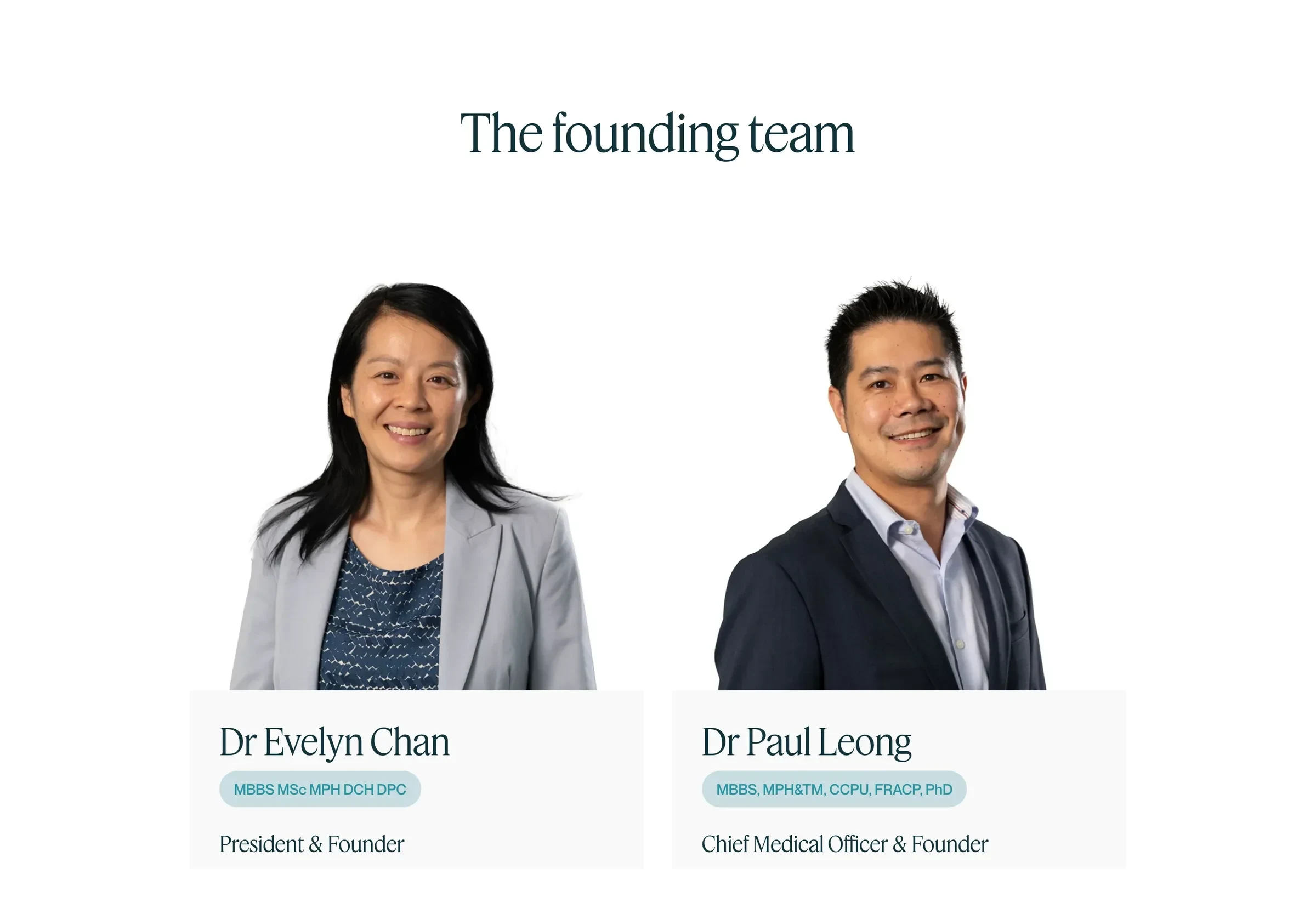
  • Dr Evelyn ChanPresident and Founder
  • Dr Paul LeongChief Medical Officer and Founder
  • Benn LockyerTechnical lead
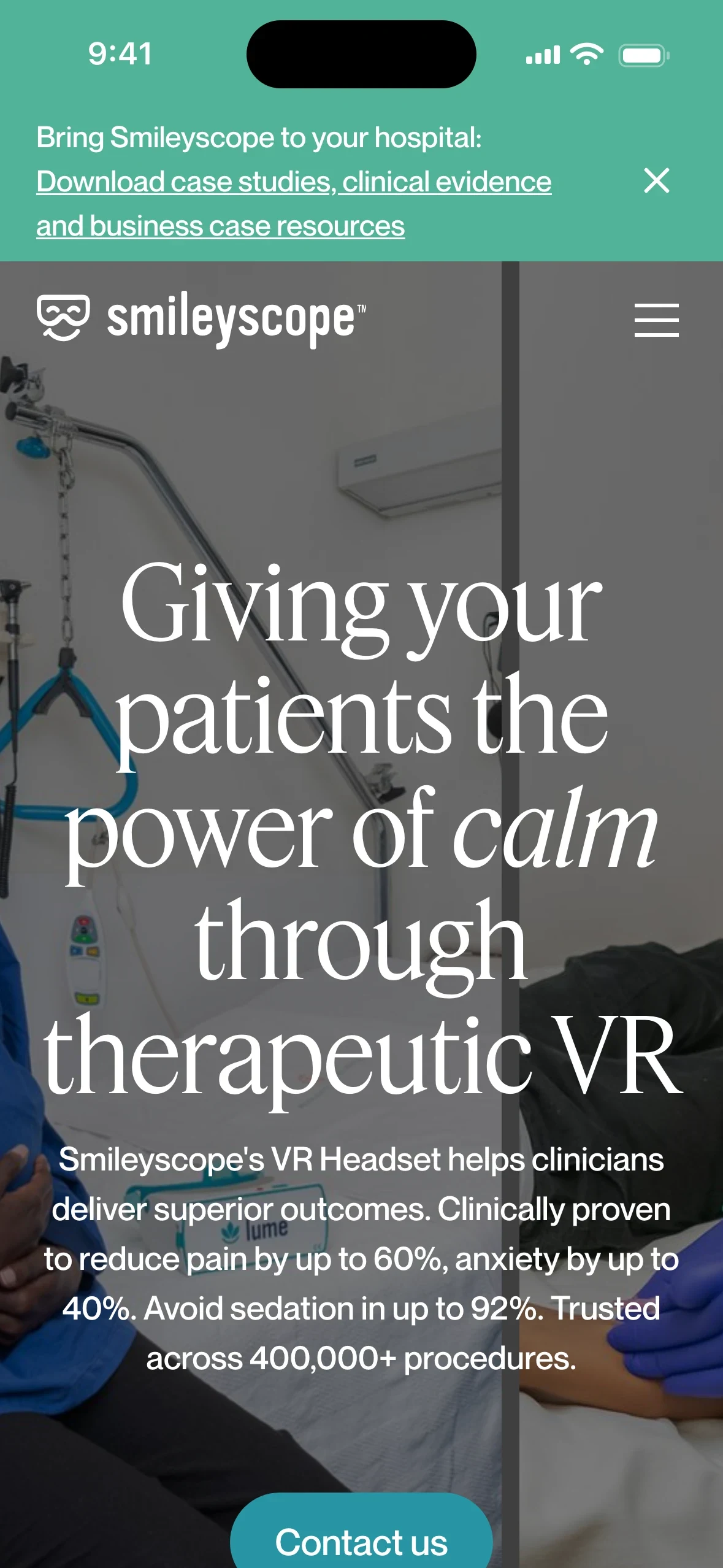
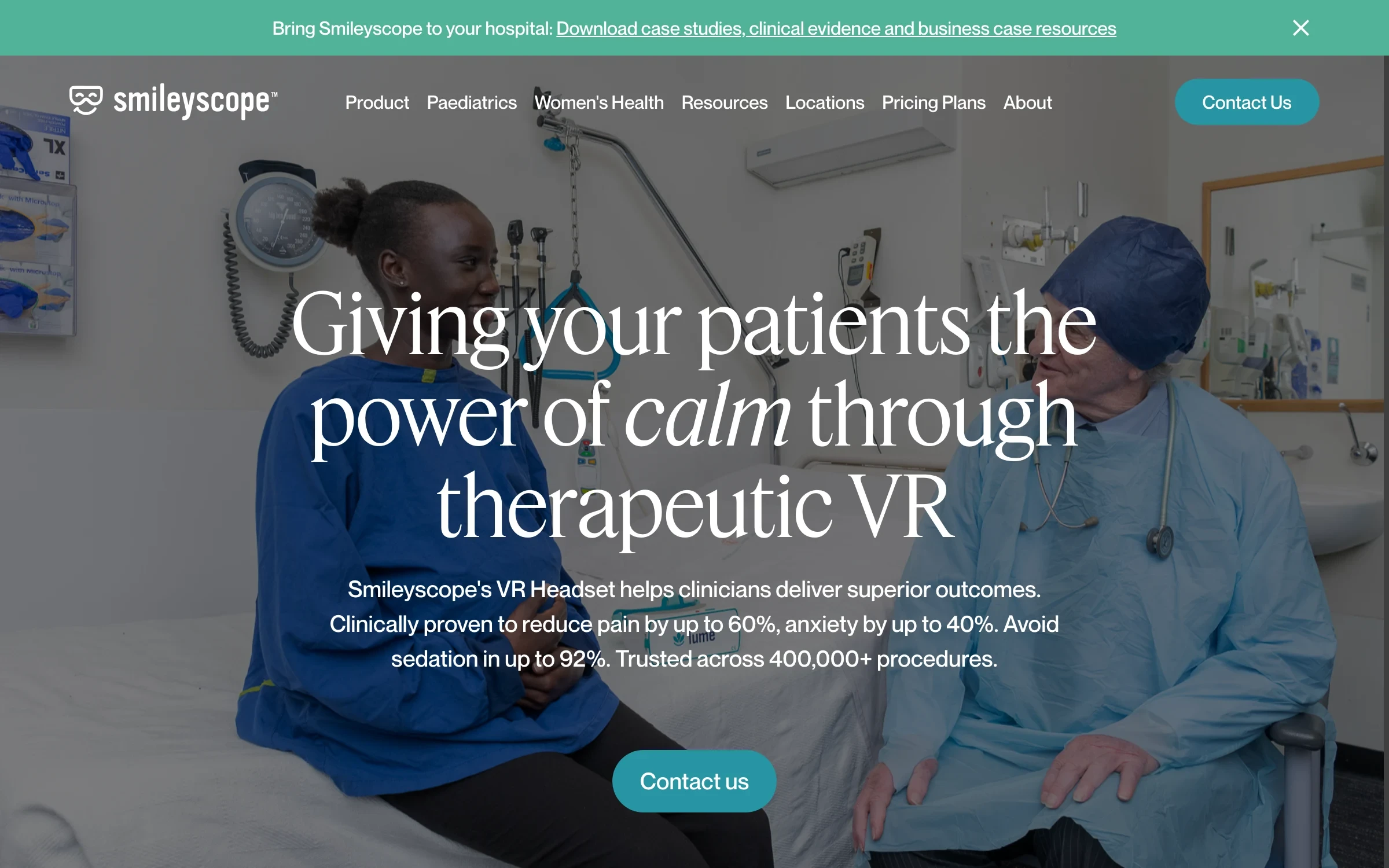
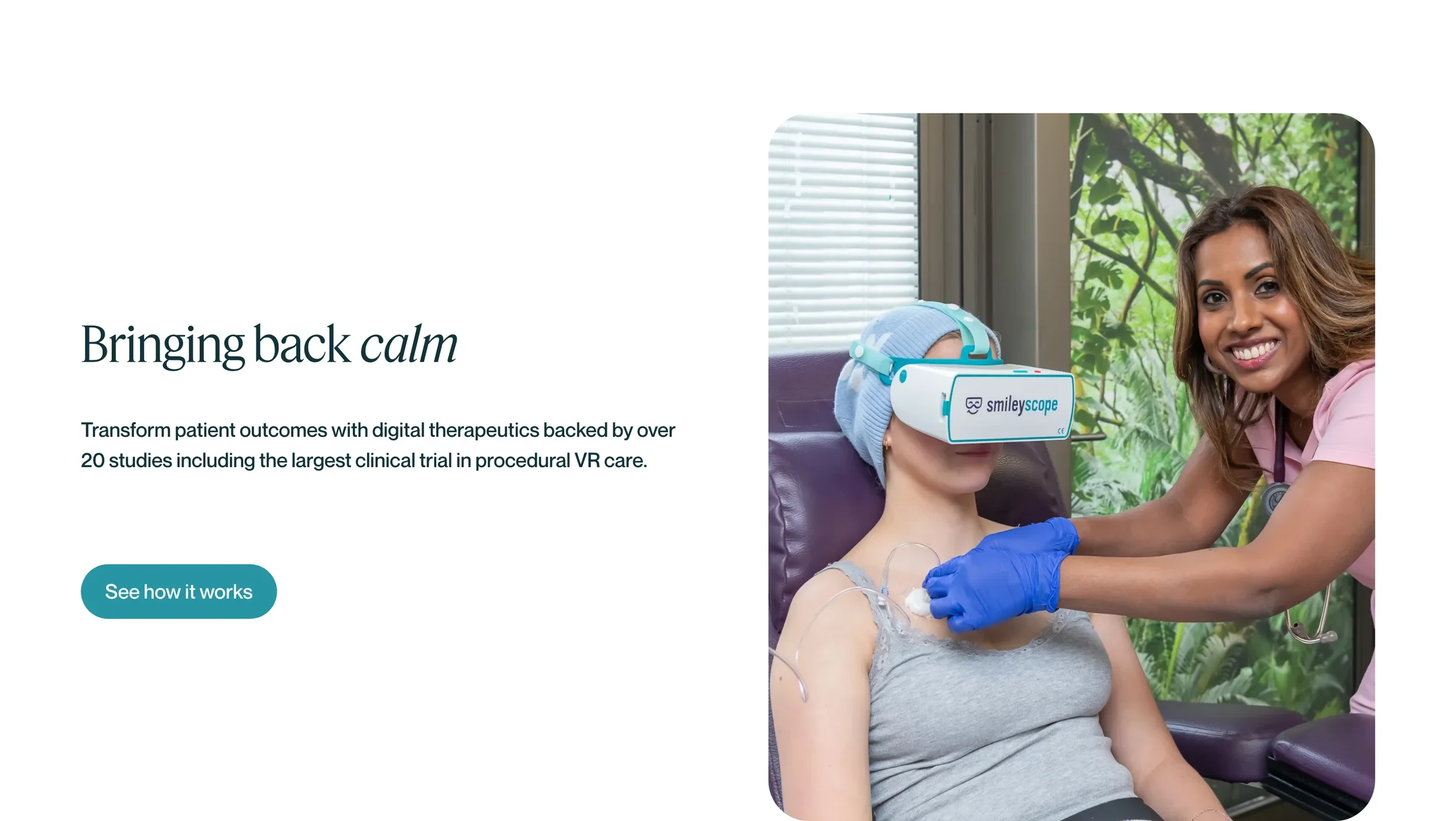
The Smileyscope home page: “Giving your patients the power of calm through therapeutic VR”

A website three years behind the product.

Smileyscope’s Wix site hadn’t been updated in about three years. It ran as two separate sites, didn’t show the full product range, and its messaging no longer matched a company growing beyond paediatrics into women’s health.

The audience is demanding: clinicians weighing the evidence, hospital administrators who hold the budget, and the patients and parents in the room. And as a medical device company, every claim Smileyscope makes has to stand on published research.

There was a deadline, too. Smileyscope’s team was heading to World Health Expo in Dubai in February 2026 to meet hospitals from around the world, and they wanted the new site live before they arrived.

Results.

  • 2versions, Australia and the US, from one site
  • 33pages live across both versions
  • 5clinical case studies in one consistent format
  • 20+paediatric specialities, organised for clinicians
  • 4.5months from project start to launch
  • Day 1of World Health Expo Dubai: the day it went live
  • “Thanks again for all your amazing work on the website: we’ve had some excellent feedback already, plus 4x “Contact Us” enquiries that have led directly to sales. That’s pretty rare in the healthcare space, so we’re really thrilled with the early traction.”

    Dr Evelyn Chan, President and Founder, Smileyscope

What we did for Smileyscope.

October to November 2025

Design

Working from new strategy and copy, we presented two design concepts: one warm and rounded, built on Smileyscope’s existing colours, and one sharper and more technical. Smileyscope chose the warmer one for its soft edges, simplicity and inviting feel, and asked to keep a softened version of the second concept’s percentage blocks. We then designed every page in Figma with their brand colours and a new typeface, and wrote the brief for a photoshoot so the site would have imagery of its own.

  • Two design concepts, and the chosen one taken through every page
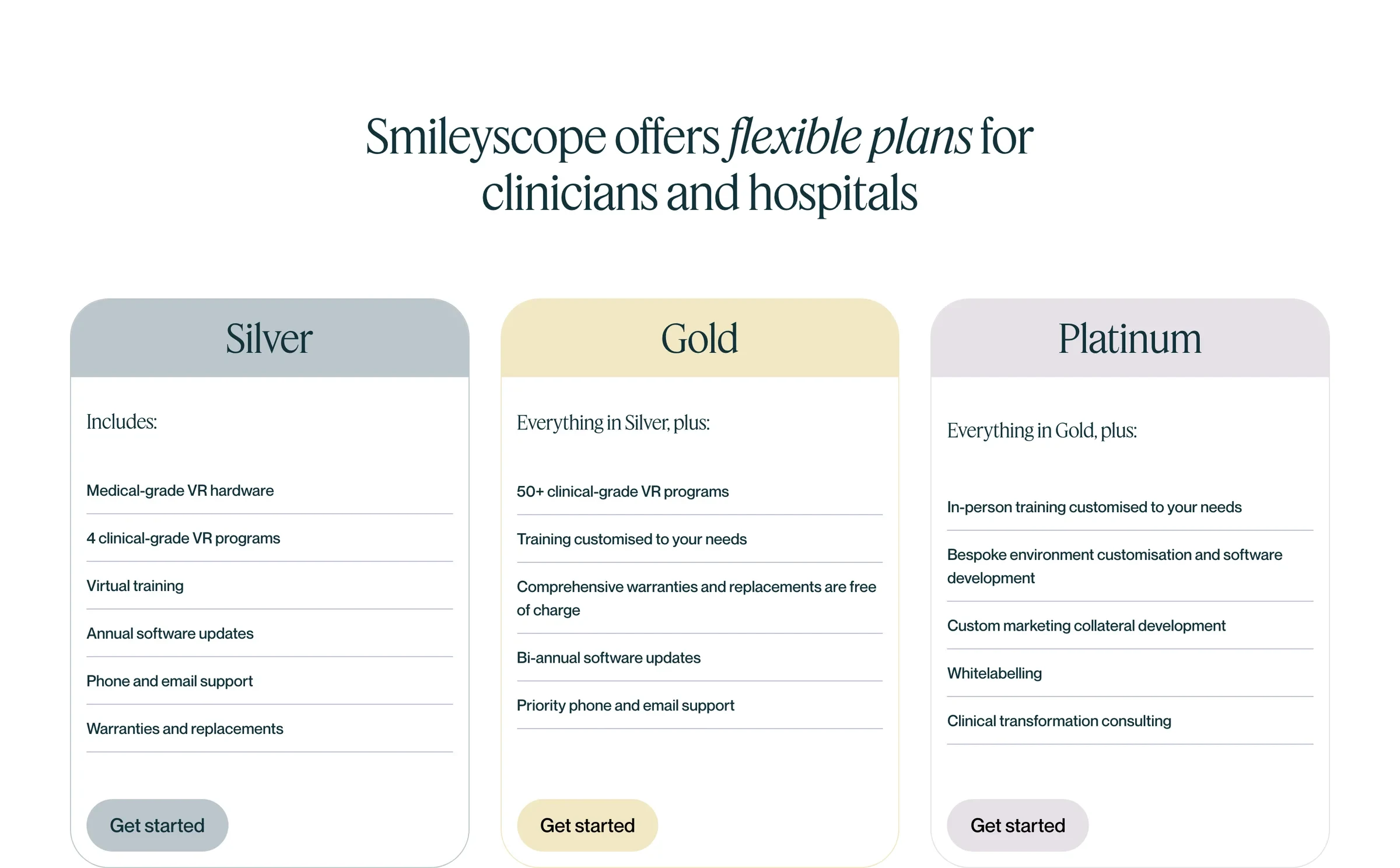
  • Home, Product, Paediatrics, Women’s Health, Resources, Press, Pricing, About and Contact
  • A case study template for clinical results
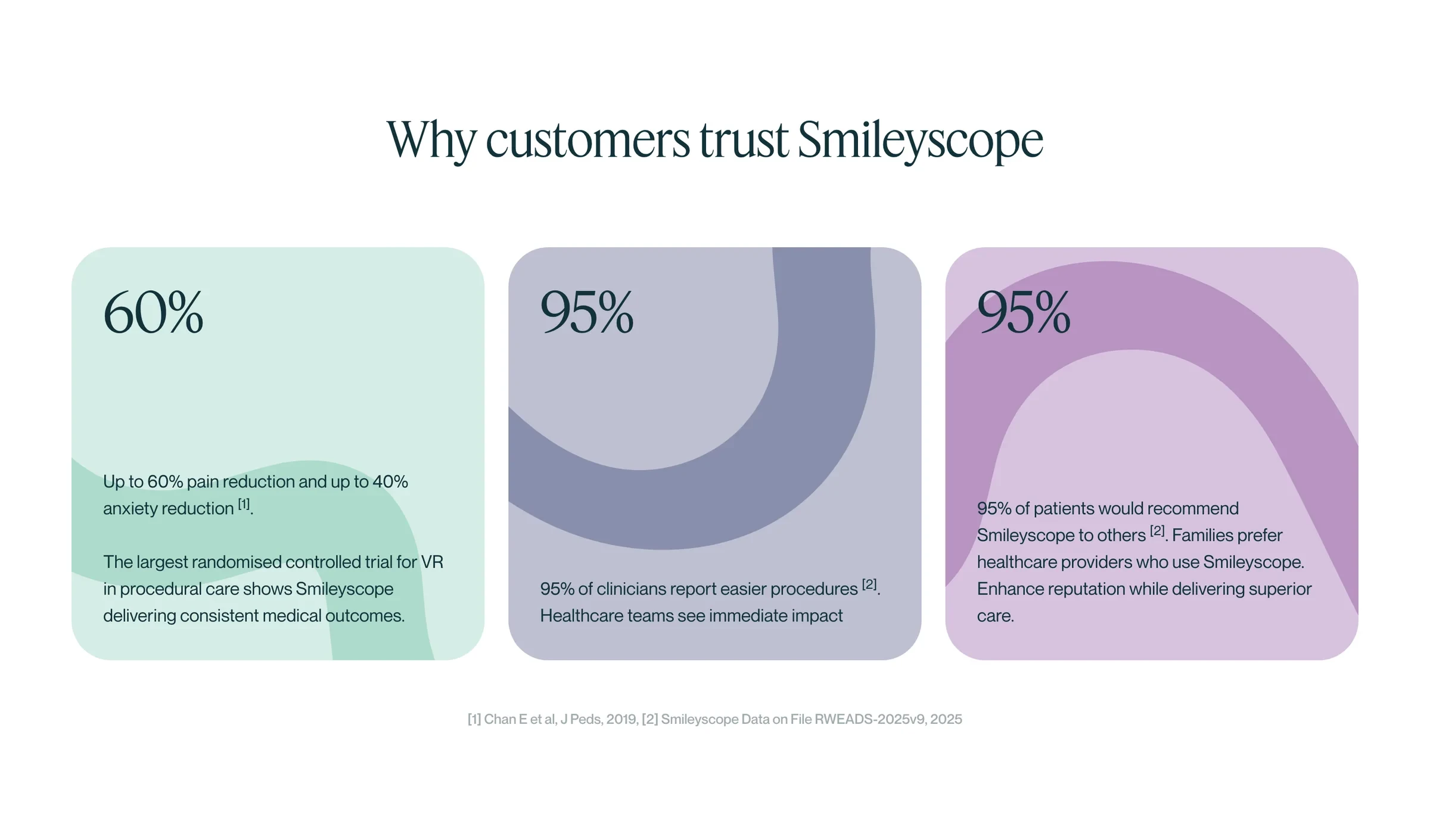
  • Clinical statistics designed with their citations in place
  • Creative direction for a photoshoot
November 2025 to February 2026

Build and launch

We built the site in Webflow, set it up for Australian and US English, and connected the forms to HubSpot. Smileyscope published it on 9 February 2026, the opening day of World Health Expo in Dubai, where their team was headed. We trained their technical lead in Webflow and handed over with walkthrough videos.

  • Webflow Localization for Australia and the US, with hreflang tags
  • A region chooser for visitors arriving at the wrong version
  • Forms connected to HubSpot, with spam protection
  • Two Wix sites brought onto one domain
  • Webflow training and handover videos
  • Later, an announcement bar their team updates themselves
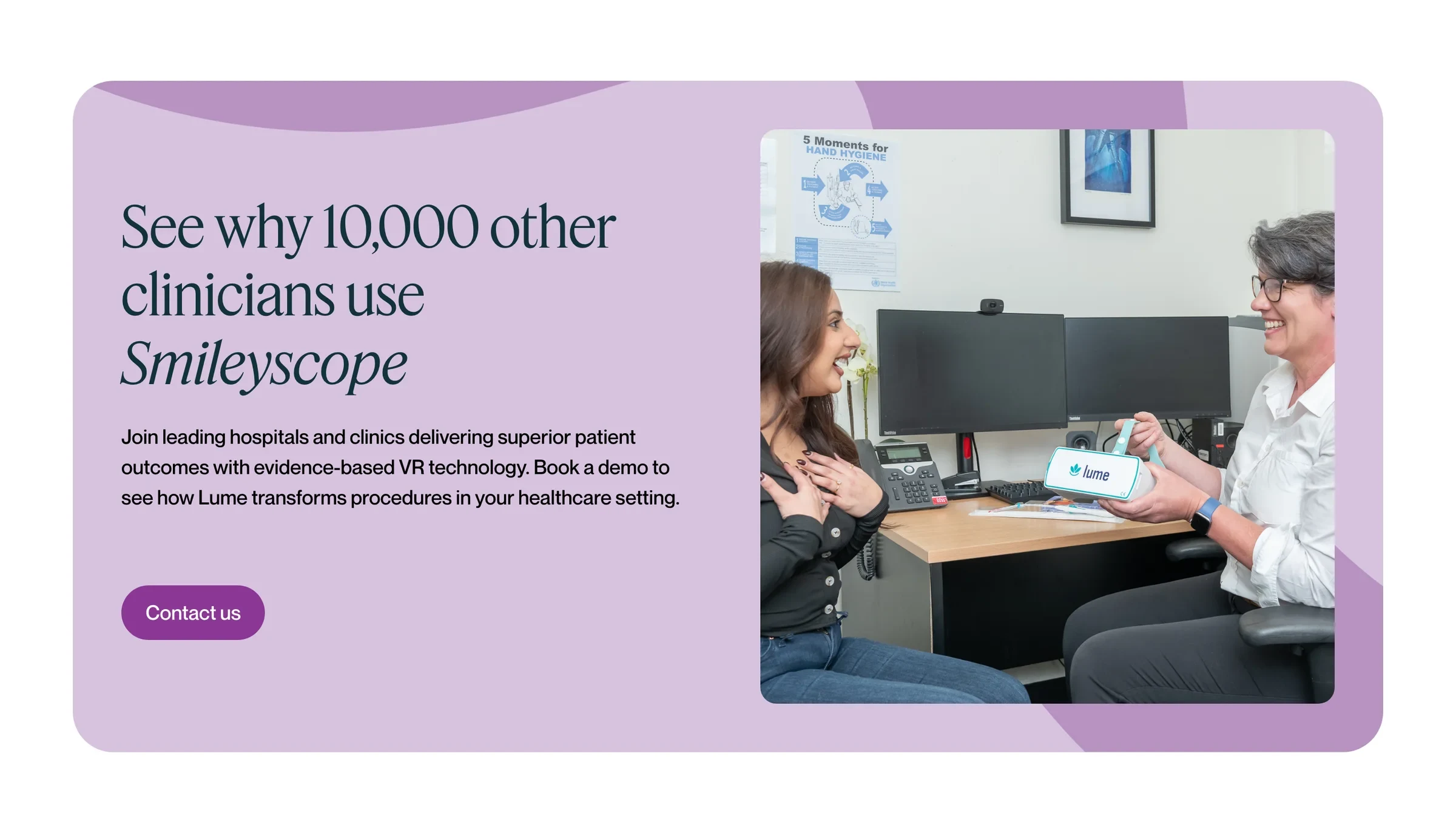
  • The Smileyscope home page on a phone
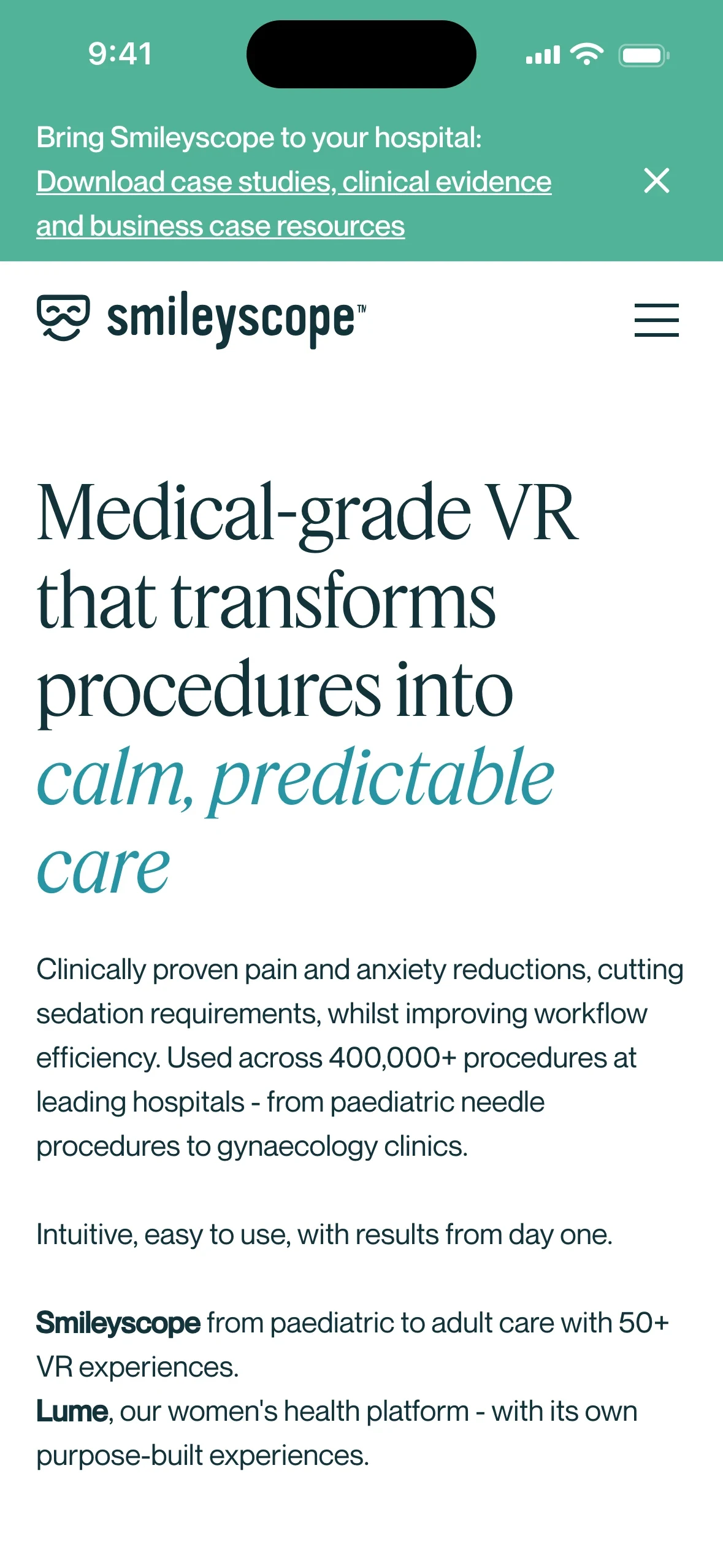
  • The Smileyscope product page on a phone
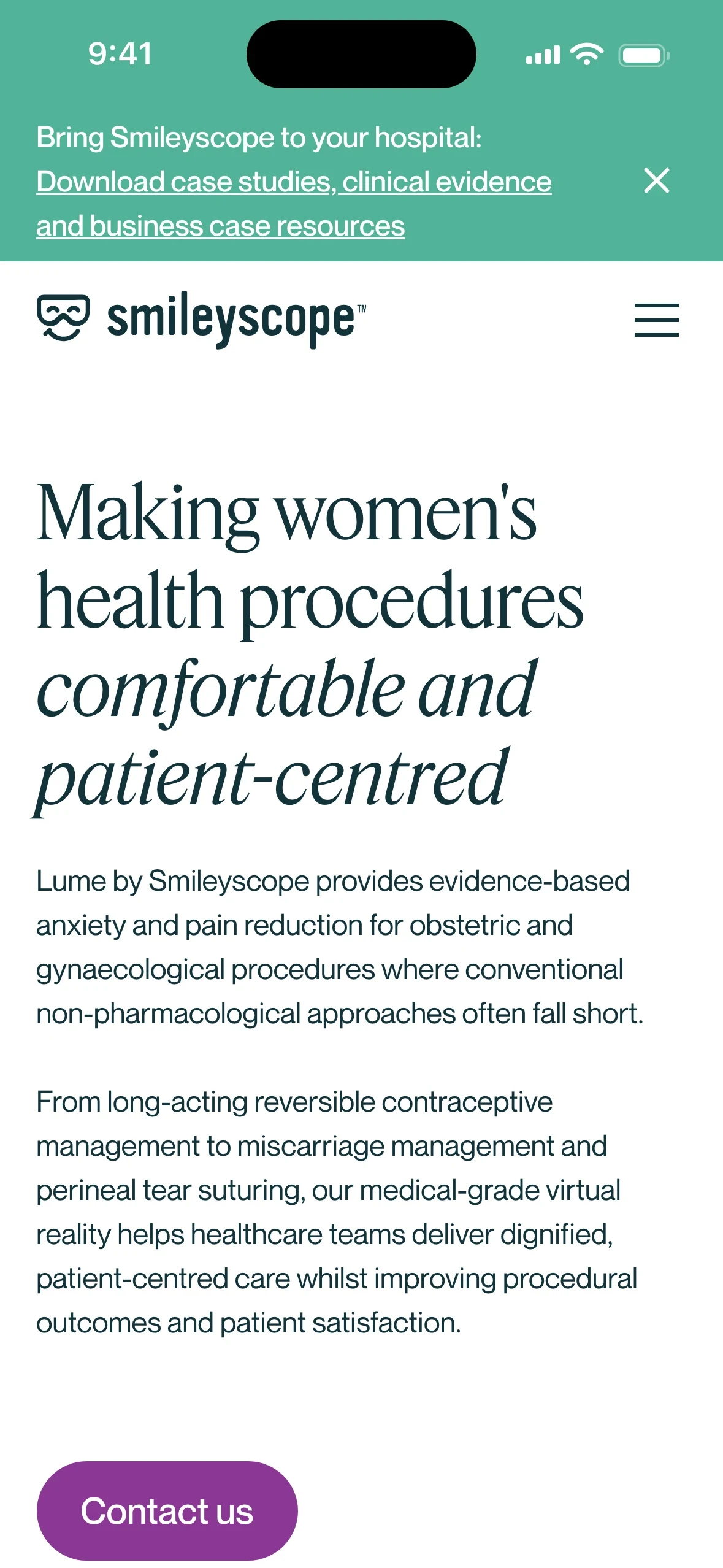
  • The Smileyscope women’s health page on a phone

One site, two markets.

Smileyscope sells in Australia and the US, and each market reads the site differently. Rather than two sites to keep in step, it’s one Webflow site with two versions: /en-au and /en-us, linked by hreflang tags so search engines show the right one.

The US version uses American spelling, so Paediatrics becomes Pediatrics. Each country has its own privacy policy under its own law, and the US product page leads with Lume, Smileyscope’s women’s health platform.

Visitors who arrive at the wrong version are asked to choose their region, Australia, UK and Europe and the rest of the world, or the United States, with the option to stay where they are.

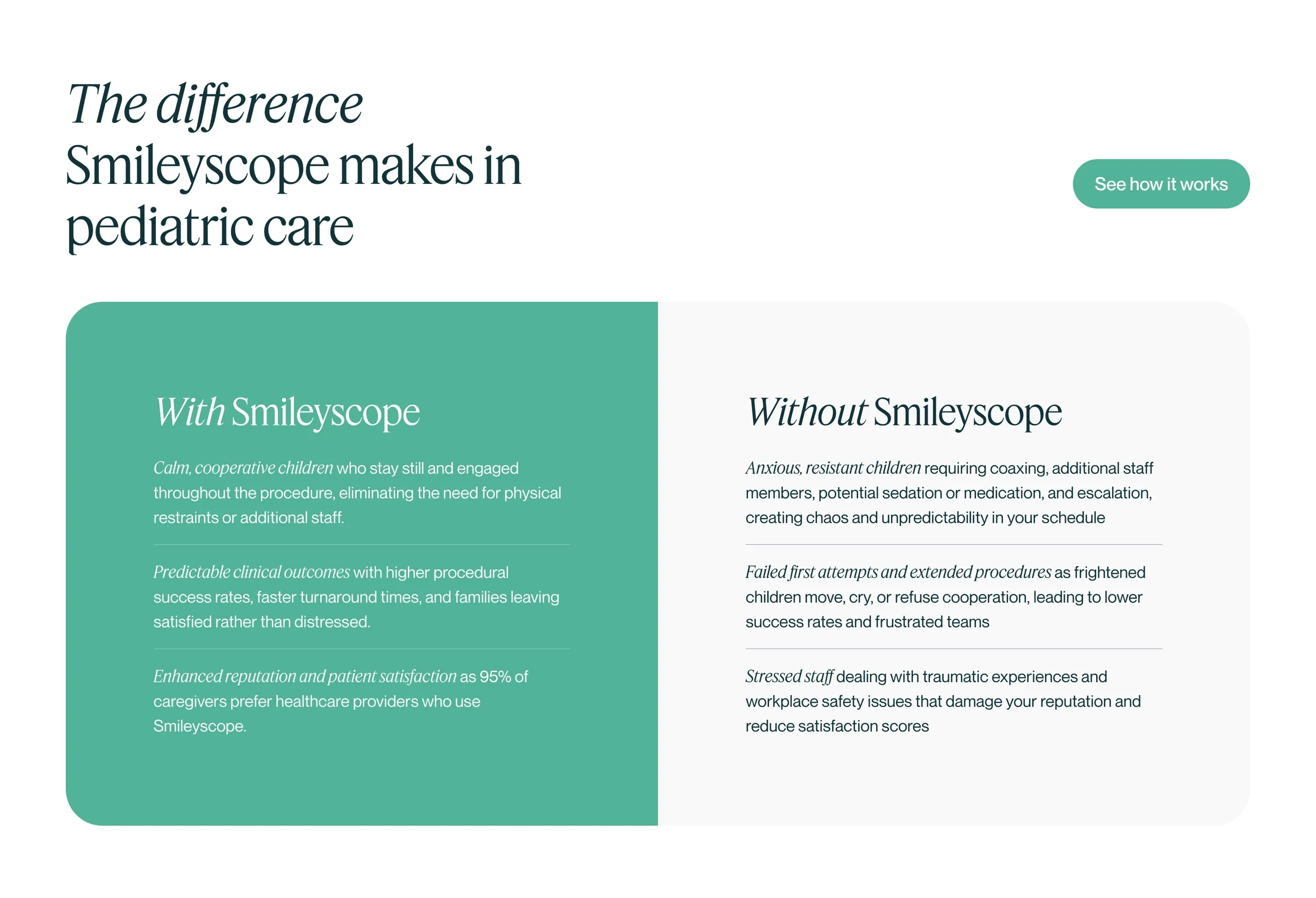
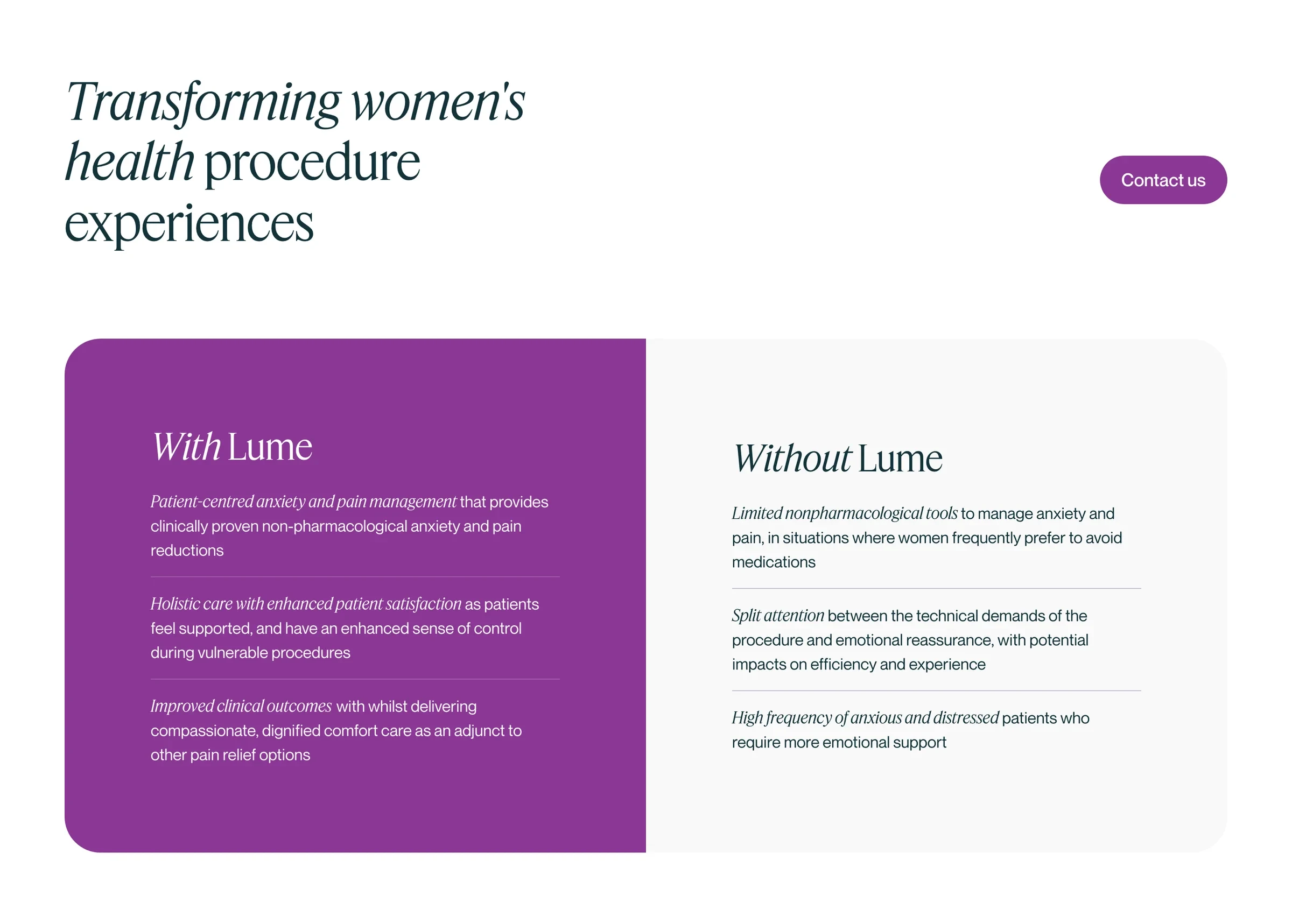
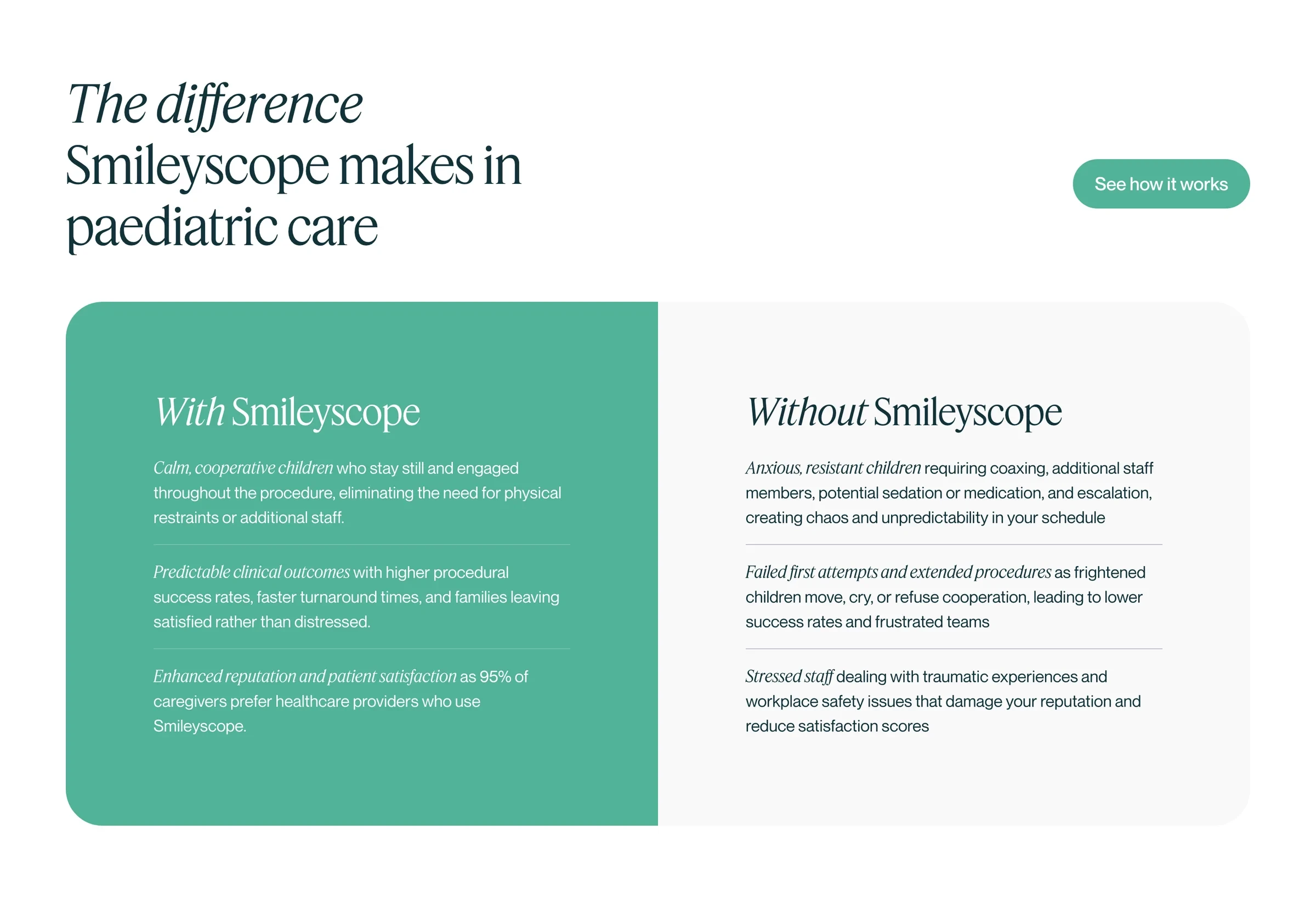
The difference Smileyscope makes in paediatric care: with and without, side by side
Paediatrics (Australia)
The same section on the US site, spelled pediatric
Pediatrics (US)

Evidence on every claim.

Clinicians want proof, and health advertising rules limit what a medical device company can say. So every statistic on the site carries a footnoted citation to the study behind it, kept in even where space is tight, and the paediatrics page links through to the research itself.

Smileyscope works across more than 20 paediatric specialities and around 15 in women’s health. Listing them all would have buried the pages, so they’re grouped: seven departments on the paediatrics page, from emergency and intensive care to Indigenous health, and gynaecology, obstetrics and sexual health for Lume. Each opens to show the specialities inside, so a clinician can find their own area quickly.

Why customers trust Smileyscope: three statistics, each footnoted to its study
Statistics, with their sources
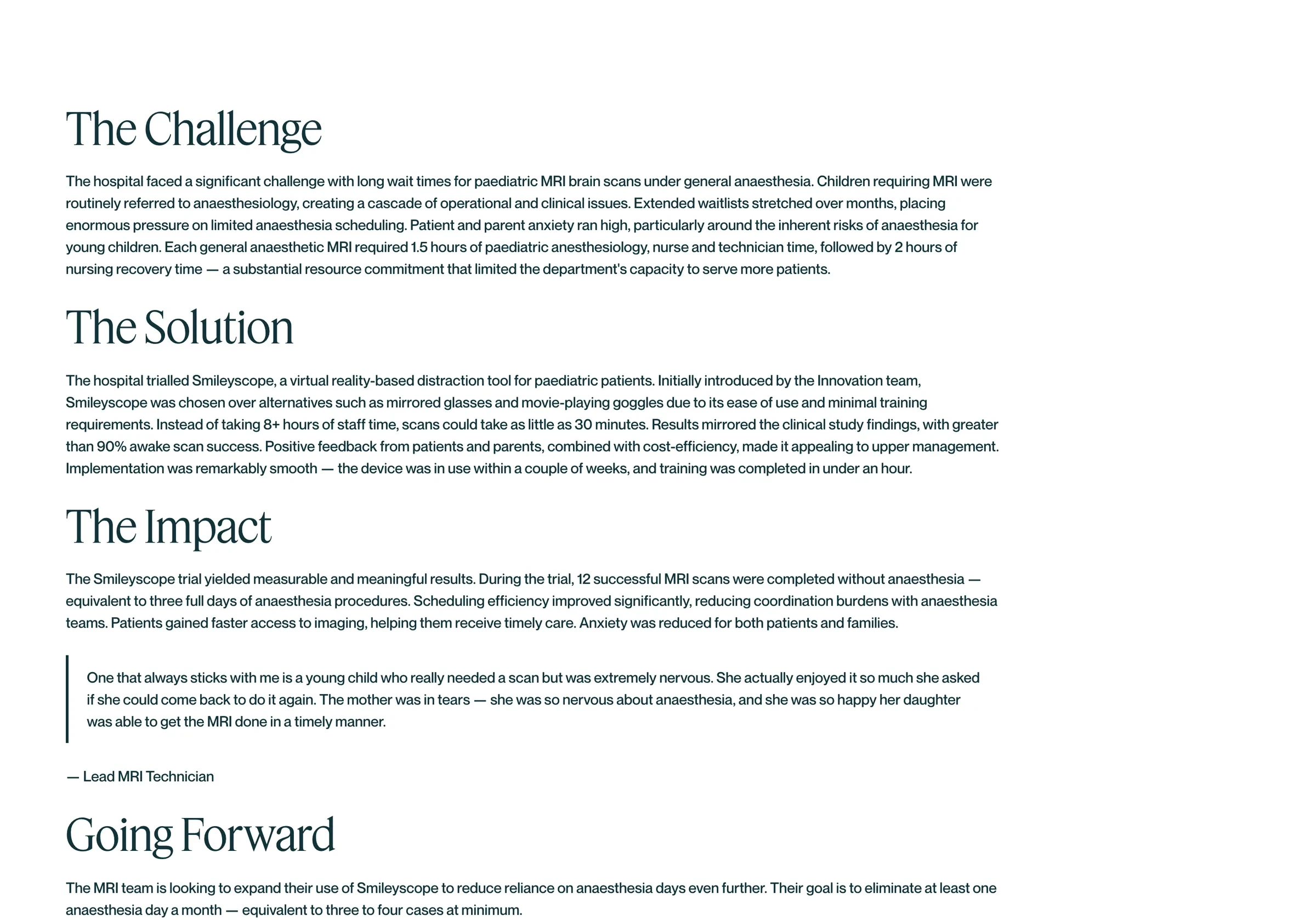
A Smileyscope case study set out as the challenge, the solution and the impact
Case study: challenge, solution, impact

Case studies hospitals can sign off.

Hospitals and clinicians often can’t put their names to a published case study: the approvals are too hard to get. So the case studies are anonymised by design. Each names its organisation by type, such as a top 10 US healthcare provider, with the location and department in fields of their own.

Every case study follows the same format, the customer, the challenge, the solution, the impact and what comes next, written as a story rather than a list of bullet points. Five are live, from paediatric MRI without general anaesthesia to VR-assisted dentistry, and Smileyscope’s team adds new ones from the CMS.

Photography made for the site.

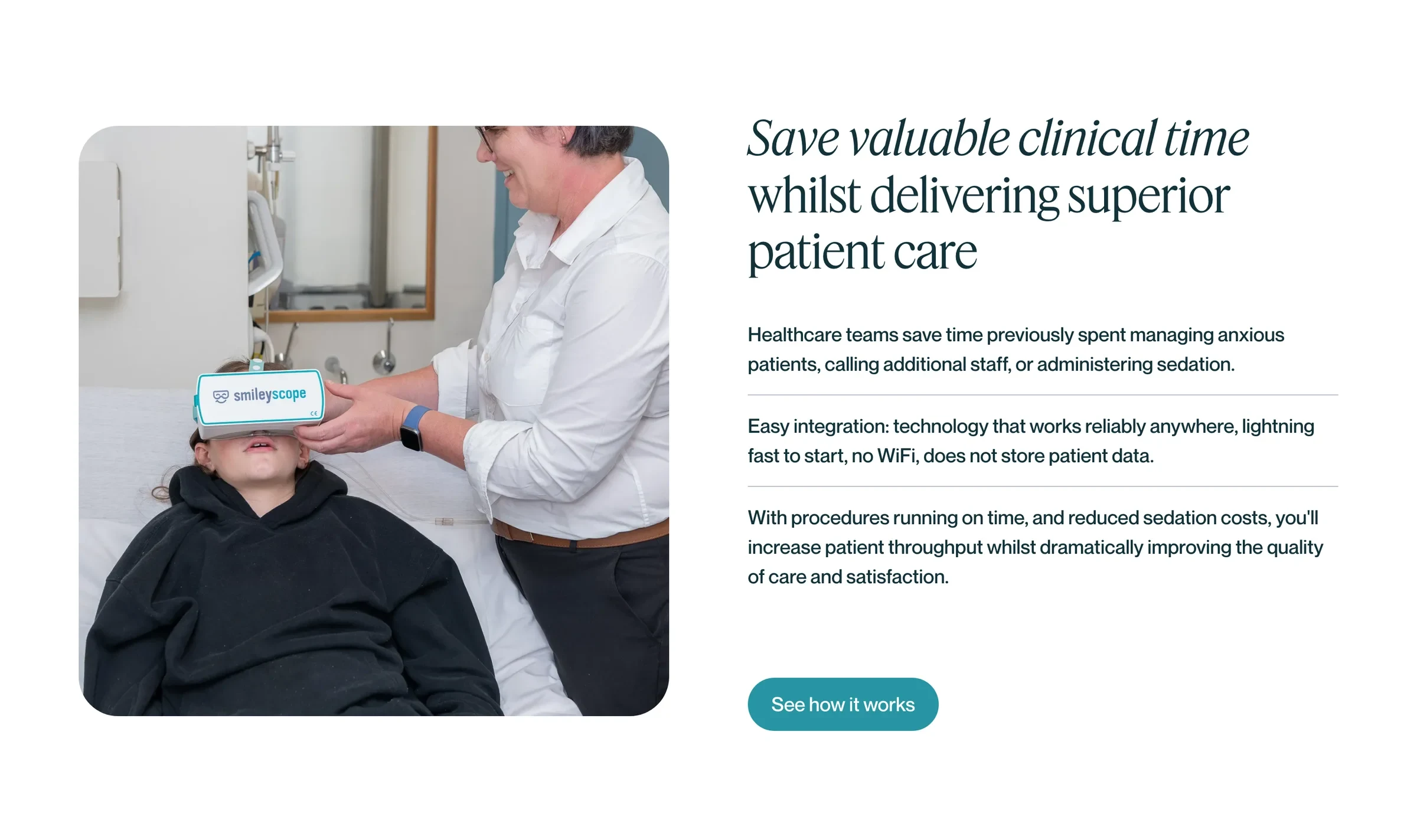
The old site relied on photos gathered over several years, and few were strong enough to lead a page. So once the designs were agreed, we wrote a creative brief for a new shoot: patients putting the headset on, a range of angles, the product on its own, and everything that comes in the box.

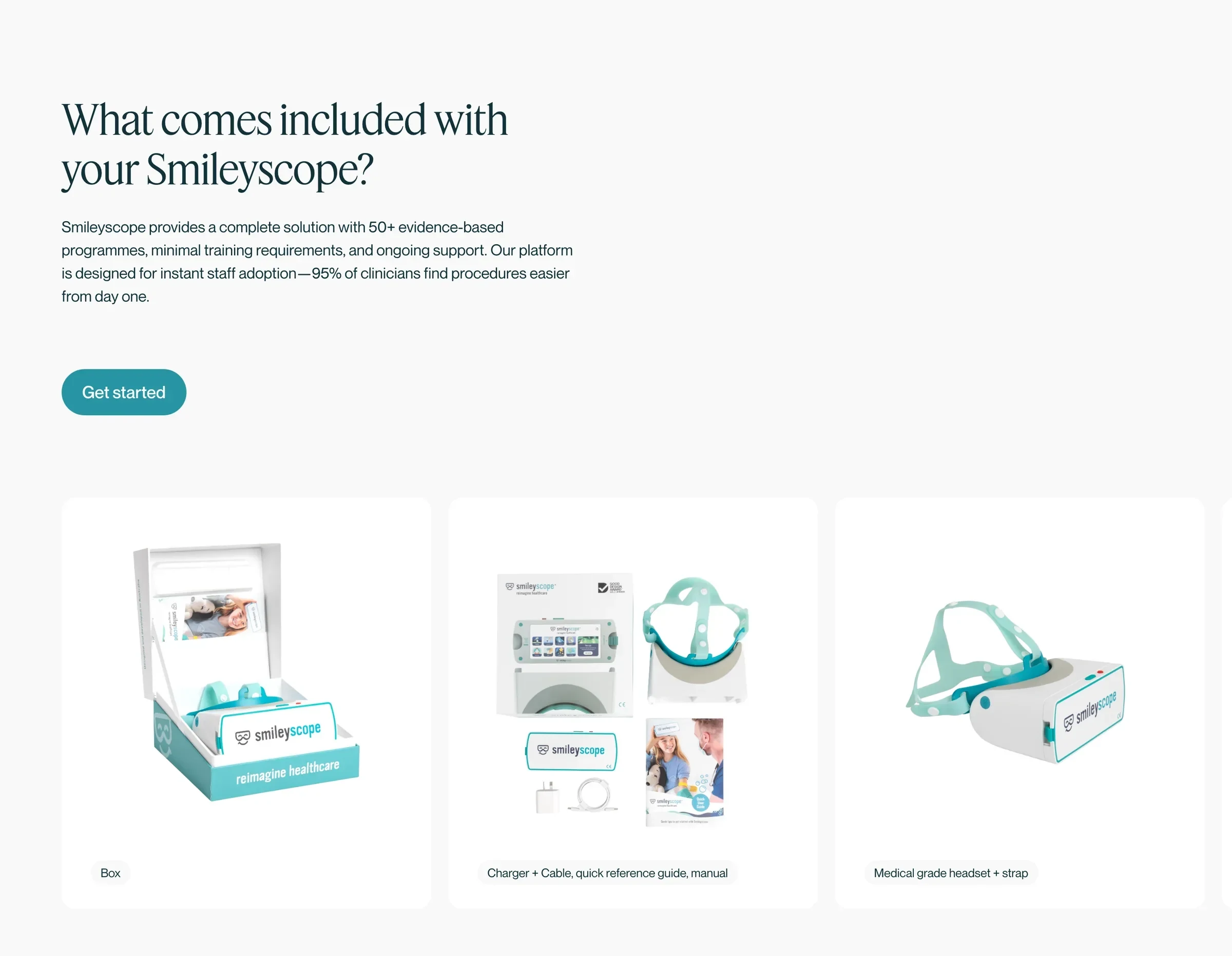
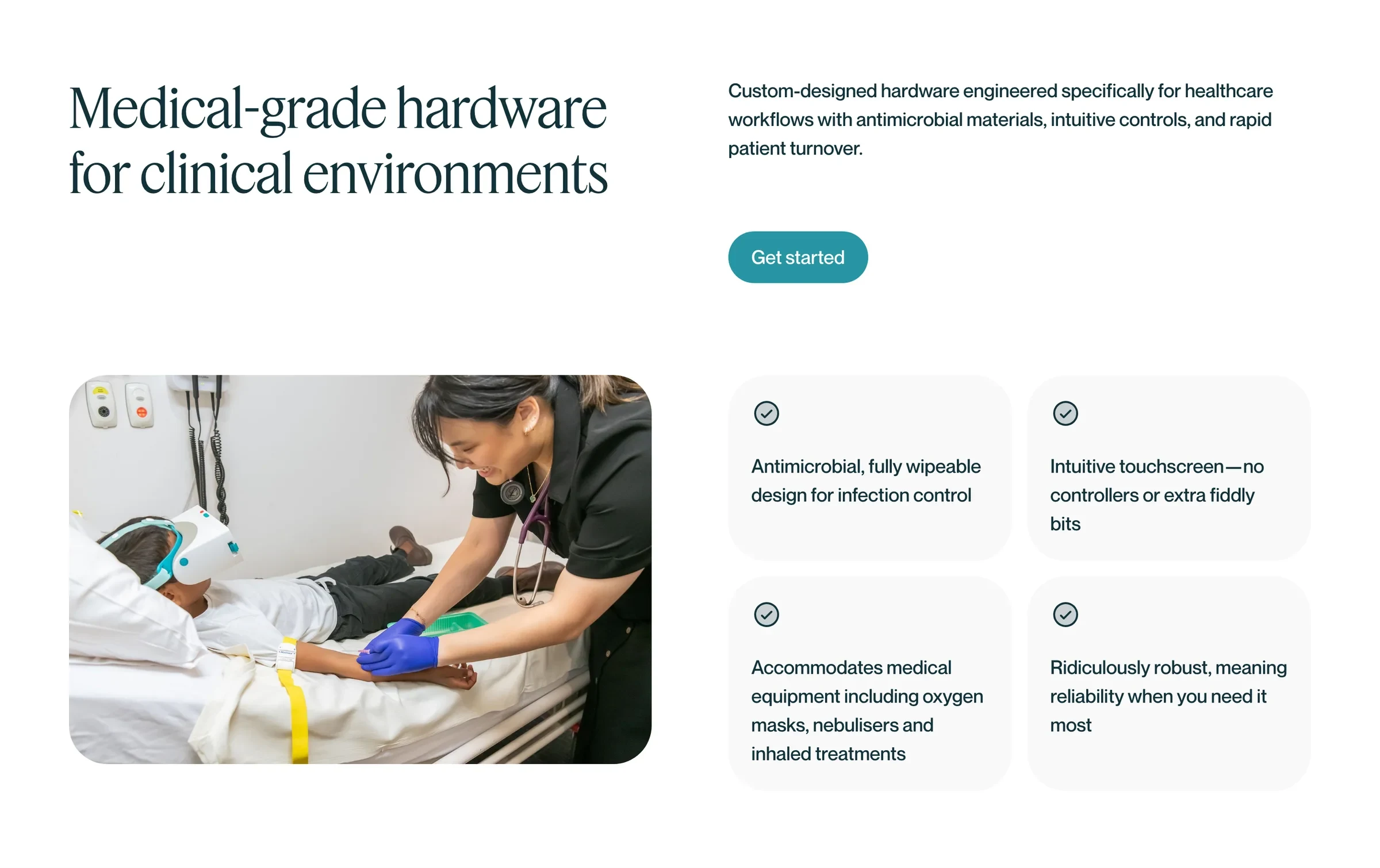
Smileyscope’s team shot four clinician and patient pairs in November 2025, children and adolescents for paediatrics and women for women’s health, cast to reflect patients in both markets. The product was photographed in the studio, and those shots now fill the product page’s “What comes included” section.

Live for World Health Expo.

The site went live on 9 February 2026, the opening day of World Health Expo in Dubai, so the people Smileyscope’s team met there could see it that week.

Before launch we trained Smileyscope’s technical lead in Webflow in a recorded session. Afterwards we sent short walkthrough videos for the updates their team makes themselves, from the US English version to the announcement bar along the top of the site.